CRCritically Endangered

Stenagostus rufus

Local name: gul jätteknäppare

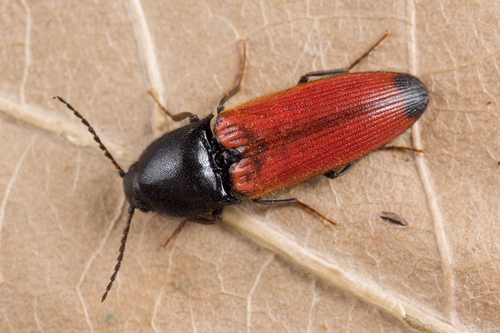
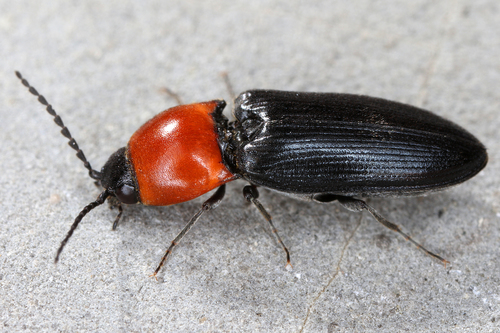
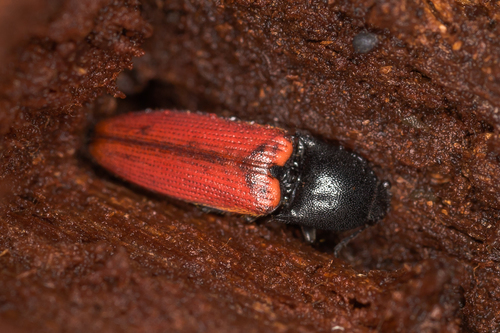
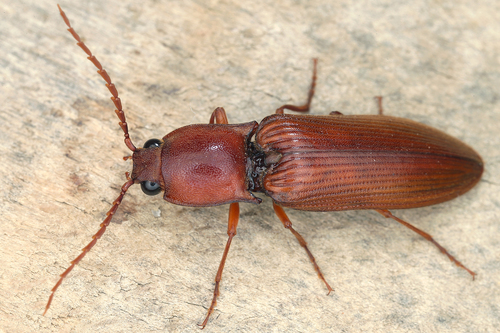
The gul jätteknäppare (Stenagostus rufus) is a large click beetle species characterized by its distinctive reddish-brown coloration and robust body structure. As a saproxylic beetle, it plays a crucial ecological role in forest ecosystems by decomposing dead wood and contributing to nutrient cycling through its larval feeding activities in decaying timber.

01Classification

Taxonomy & Classification

Kingdom

Animalia

Phylum

Arthropoda

Class

Insecta

Order

Coleoptera

Family

Elateridae

Genus

Stenagostus

Stenagostus rufus belongs to the family Elateridae, order Coleoptera, within the Insecta class.

02Description

Species Profile

The gul jätteknäppare (Stenagostus rufus) is a large click beetle species characterized by its distinctive reddish-brown coloration and robust body structure. As a saproxylic beetle, it plays a crucial ecological role in forest ecosystems by decomposing dead wood and contributing to nutrient cycling through its larval feeding activities in decaying timber.

Stenagostus rufus is critically endangered primarily due to habitat loss from deforestation and forest fragmentation in its limited range. The species depends on old-growth forests with specific microhabitat requirements, making it extremely vulnerable to logging and land conversion. Climate change may further threaten the species by altering forest composition and reducing suitable habitat.

Key Facts

IUCN StatusCritically Endangered (CR)
GroupInsects
03Habitat

Habitat & Distribution

Stenagostus rufus inhabits mature coniferous and mixed forests, particularly those with abundant dead standing trees, fallen logs, and stumps in various stages of decay. The species shows a strong preference for sun-exposed deadwood in forest clearings and edges where larvae can develop in the softened wood of pine, spruce, and other conifers.

04Threats

Threats

!

IUCN Red List: Critically Endangered

Stenagostus rufus is critically endangered primarily due to habitat loss from deforestation and forest fragmentation in its limited range. The species depends on old-growth forests with specific microhabitat requirements, making it extremely vulnerable to logging and land conversion. Climate change may further threaten the species by altering forest composition and reducing suitable habitat.

Deforestation and logging

HighOngoing

Forest fragmentation

HighOngoing

Habitat degradation

HighOngoing

Limited range and small population size

HighOngoing

Climate change impacts on forest ecosystems

MediumOngoing
07National Status

National vs Global Threat Status

How this species is assessed at the national level compared to its IUCN global status (CR).

CountryNational StatusGlobal StatusComparison
EULCLeast ConcernCRCritically EndangeredLower local risk

National Red List data sourced from the National Red List Project (nationalredlist.org, ZSL) and country-specific Red List authorities.

Community

Community Sightings

Report a sighting

No community sightings yet. Be the first to report!

07Sources

Sources & Attribution

How to Cite

IUCN: IUCN (2025). The IUCN Red List of Threatened Species. Version 2025-1. Available at: https://www.iucnredlist.org. doi:10.2305/IUCN.UK.2025-1.RLTS

GBIF: GBIF.org (2025). GBIF Home Page. Available at: https://www.gbif.org

National Red Lists: ZSL (2025). National Red List. Zoological Society of London. Available at: https://www.nationalredlist.org

This page: SpeciesRadar (2025). Stenagostus rufus (Stenagostus rufus). SpeciesRadar: Intelligence for Earth's Biodiversity. Available at: https://speciesradar.org/species/gul-jatteknappare

Full citation guide & data usage terms