
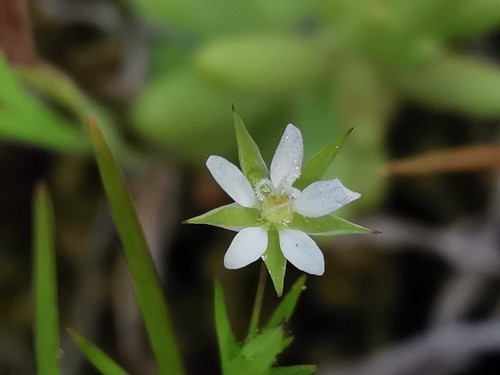
Grove Sandwort
Moehringia lateriflora
Photo: Wikimedia Commons (CC) via https://en.wikipedia.org/wiki/Moehringia_lateriflora
Overview
A detailed profile for this species is sourced from the IUCN Red List of Threatened Species as assessments become available.
Grove Sandwort faces severe habitat loss from urban development and agricultural expansion across its limited range in eastern North America. The species' specialized requirement for moist, shaded woodland environments makes it particularly vulnerable to forest fragmentation and edge effects. Climate change poses an additional threat by altering moisture regimes and temperature patterns in the cool, humid microhabitats this species depends upon.
Habitat
Grove Sandwort inhabits moist, shaded deciduous and mixed forests, typically growing in rich, humus-laden soils along stream banks, ravines, and woodland slopes. The species requires cool, humid microenvironments with consistent moisture and partial to full shade.
Other threatened species in Caryophyllaceae

Frequently asked questions
Why is Grove Sandwort classified as Vulnerable?
Where does Grove Sandwort live?
What are the main threats to Grove Sandwort?
Get weekly conservation intelligence
One short digest a week of the most striking species and country data we ship, plus breaking conservation news paired with our database where it matters.
Free, no spam. One-click unsubscribe in every email.