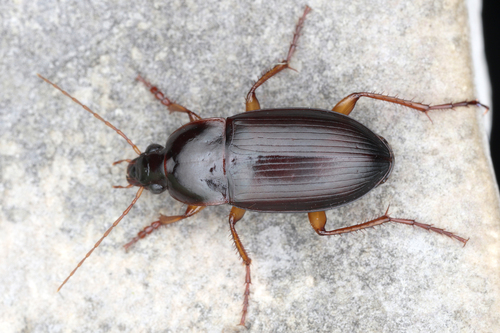
Calathus ambiguus
Photo: Photo: (c) gernotkunz, all rights reserved, uploaded by gernotkunz
Overview
Grote tandklauw (Calathus ambiguus) is a medium-sized ground beetle belonging to the family Carabidae, characterized by its dark metallic coloration and distinctive mandible structure that gives it its Dutch name meaning 'large tooth claw'. This nocturnal predator plays a crucial ecological role as both hunter of smaller invertebrates and prey for birds, amphibians, and spiders in its ecosystem.
Calathus ambiguus, known as Grote tandklauw, is critically endangered primarily due to habitat loss and degradation of its specialized coastal dune and sandy grassland environments. The species faces severe population decline from urban development, agricultural intensification, and changes in land management practices that have eliminated or fragmented its remaining habitat patches.
Habitat
Calathus ambiguus inhabits moist, undisturbed areas along forest edges, particularly in leaf litter and under fallen logs in deciduous and mixed woodlands. The species also occurs in traditional extensively managed grasslands with scattered shrubs and in the transition zones between agricultural fields and natural vegetation.
Other threatened species in Carabidae

Threatened in Afghanistan

Frequently asked questions
Why is Calathus ambiguus classified as Critically Endangered?
Where does Calathus ambiguus live?
What are the main threats to Calathus ambiguus?
Get weekly conservation intelligence
One short digest a week of the most striking species and country data we ship, plus breaking conservation news paired with our database where it matters.
Free, no spam. One-click unsubscribe in every email.