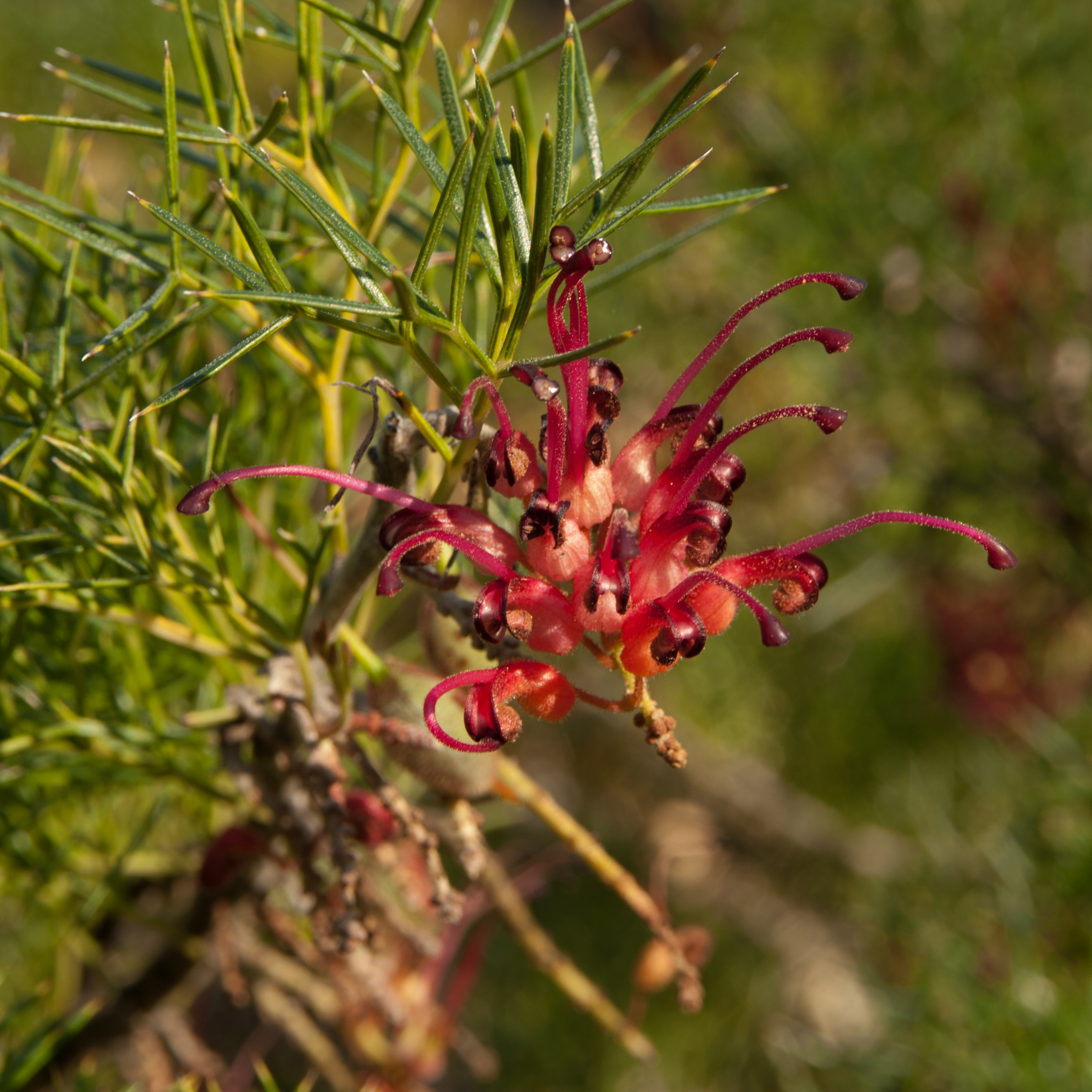
Grevillea maxwellii
Local name: Maxwell’s Grevillea
Photo: Photo: Wikimedia Commons, CC BY-SA
Overview
Maxwell's Grevillea is a shrub in the family Proteaceae, characterized by the finely divided, needle-like foliage typical of many Grevillea species and clusters of flowers that provide nectar for birds and insects, supporting local pollinator activity. Like other Proteaceae, it likely produces follicular fruits following flowering. As a woody shrub, it contributes structural complexity to its habitat, offering shelter and forage resources within the plant communities it inhabits.
The species is endemic to Australia, where it occurs in shrubland, rocky areas, and habitats associated with permanent inland rivers and streams. This combination of rocky terrain and proximity to watercourses suggests a reliance on specific substrate and moisture conditions, likely restricting the species to a limited number of localities within its native range.
Maxwell's Grevillea is classified as Critically Endangered, with a decreasing population trend. Ongoing threats include habitat degradation from livestock farming and ranching, which can lead to trampling, grazing pressure, and soil disturbance. Recurrent drought conditions place additional physiological stress on populations, while altered fire regimes—including both increased fire frequency and fire suppression—can disrupt natural regeneration cycles that many Proteaceae depend upon.
Logging and wood harvesting further reduce available habitat, and an unspecified additional threat compounds these pressures.
Conservation actions for this species have not been detailed here, but Critically Endangered Australian flora of this kind typically benefit from habitat protection, monitoring of remaining populations, and seed banking efforts undertaken by regional conservation agencies and botanic institutions.
Given the combination of ongoing habitat pressures, climatic stress, and altered disturbance regimes, the species' trajectory remains concerning, with continued population decline expected absent effective, sustained intervention.
Maxwell's Grevillea faces pressure from land being cleared and used for livestock grazing, along with logging and wood harvesting that removes its natural habitat. It is also threatened by prolonged droughts and fire (including fire management practices), as well as other unspecified environmental pressures. These threats are ongoing and show no sign of easing, suggesting a stable but persistent level of risk to the species.
Habitat
Conservation measures underway
Other threatened species in PROTEACEAE
Threatened in Australia
Frequently asked questions
Why is Maxwell’s Grevillea classified as Critically Endangered?
Where does Maxwell’s Grevillea live?
What are the main threats to Maxwell’s Grevillea?
Get weekly conservation intelligence
One short digest a week of the most striking species and country data we ship, plus breaking conservation news paired with our database where it matters.
Free, no spam. One-click unsubscribe in every email.