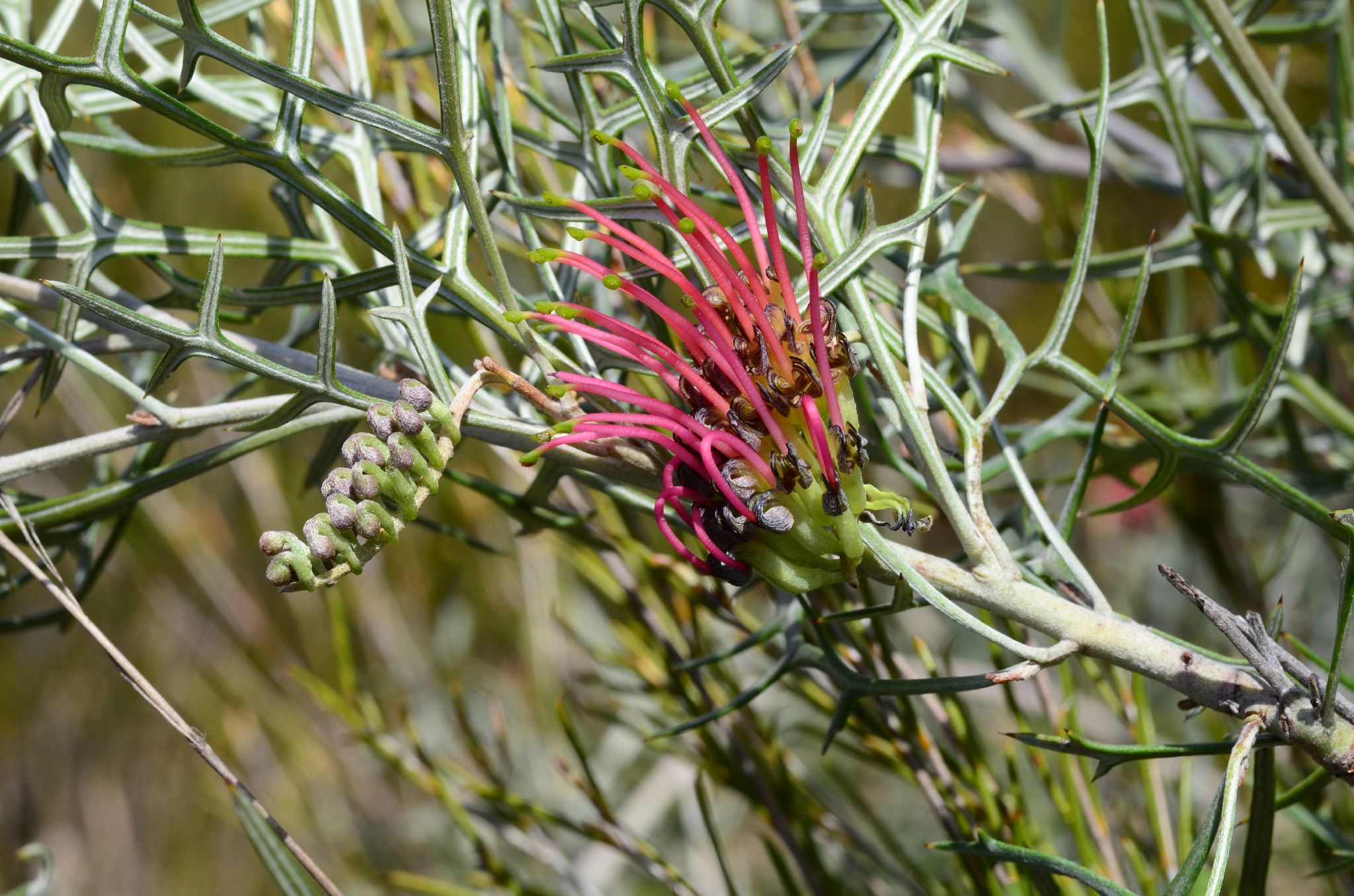
Grevillea angustiloba
Photo: Wikimedia Commons (CC) via https://en.wikipedia.org/wiki/Grevillea_angustiloba
Overview
Grevillea angustiloba is a woody shrub belonging to the Proteaceae family, a group of flowering plants known for producing distinctive flower clusters that attract nectar-feeding insects and birds. Like other members of its genus, it likely bears narrow, elongated leaves and toothbrush-like flower spikes, contributing to pollinator activity within its local ecosystem. As a perennial shrub, it plays a structural role in the vegetation communities it inhabits, offering shelter and forage resources to invertebrates and small vertebrates.
The species is restricted to Australia, where it grows in shrubland and rocky terrain. These habitats are typically characterised by shallow, well-drained soils and exposure to sun and wind, conditions to which many Grevillea species are specifically adapted.
Grevillea angustiloba is classified as Critically Endangered, with a population trend that continues to decline. Two ongoing pressures are principally responsible: the expansion and management of annual and perennial non-timber crops, which leads to habitat clearing and land conversion, and logging and wood harvesting activities, which degrade or remove the woody vegetation this species depends on. Both threats operate continuously rather than as isolated events, compounding pressure on already limited populations.
Specific conservation programs for this species are not well documented in available records, though its Critically Endangered status would typically warrant habitat protection measures, population monitoring, and potential inclusion in regional seed banking or restoration efforts common to threatened Proteaceae in Australia.
Given the ongoing nature of the threats and the continuing downward population trend, the species' outlook remains precarious. Without intervention to curb habitat loss from agricultural and logging pressures, further decline is expected.
Grevillea angustiloba is mainly threatened by land being cleared for growing crops, as well as ongoing cutting down of trees for timber and wood products. Both of these activities are currently active and continuing. Based on the available information, these threats appear to be stable and ongoing rather than clearly increasing or decreasing.
Habitat
Conservation measures underway
Other threatened species in PROTEACEAE
Threatened in Australia
Frequently asked questions
Why is Grevillea angustiloba classified as Critically Endangered?
Where does Grevillea angustiloba live?
What are the main threats to Grevillea angustiloba?
Get weekly conservation intelligence
One short digest a week of the most striking species and country data we ship, plus breaking conservation news paired with our database where it matters.
Free, no spam. One-click unsubscribe in every email.