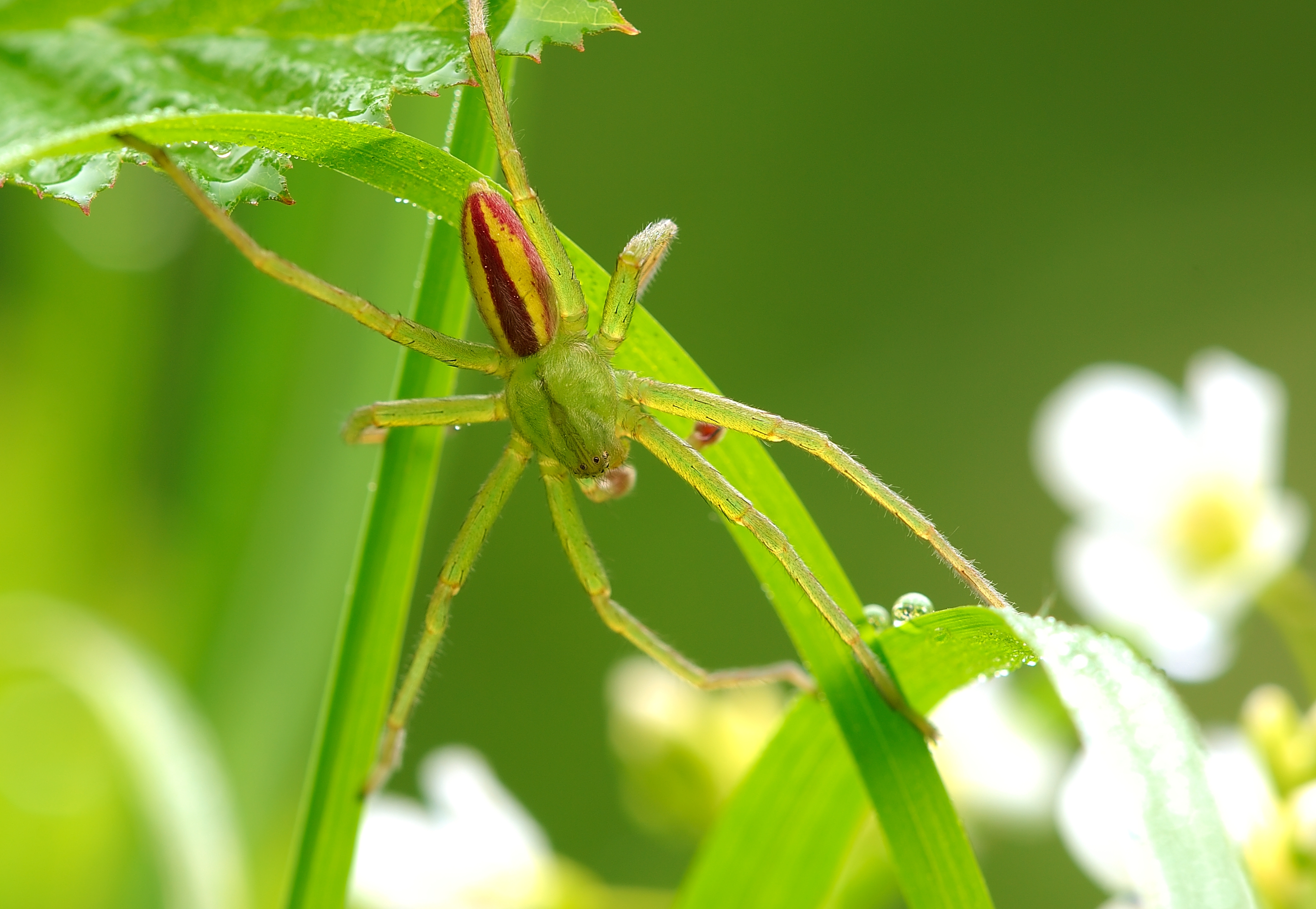
Green Spider
Micrommata virescens
Photo: Wikimedia Commons (CC) via https://en.wikipedia.org/wiki/Micrommata_virescens
Overview
Micrommata virescens, common name green huntsman spider, or emerald spider is a species of huntsman spiders belonging to the family Sparassidae.
The Green Spider (Micrommata virescens) faces significant population declines primarily due to habitat loss and fragmentation of its preferred woodland and heathland environments. Agricultural intensification, urbanization, and changes in land management practices have reduced the availability of suitable hunting grounds and breeding sites. Climate change may also be affecting the species' distribution and the availability of its arthropod prey.
Habitat
This species has a Palearctic distribution. It occurs naturally in Northern and Central Europe, including Denmark and Britain.
Threatened in Afghanistan

Frequently asked questions
Why is Green Spider classified as Critically Endangered?
Where does Green Spider live?
What are the main threats to Green Spider?
Get weekly conservation intelligence
One short digest a week of the most striking species and country data we ship, plus breaking conservation news paired with our database where it matters.
Free, no spam. One-click unsubscribe in every email.