
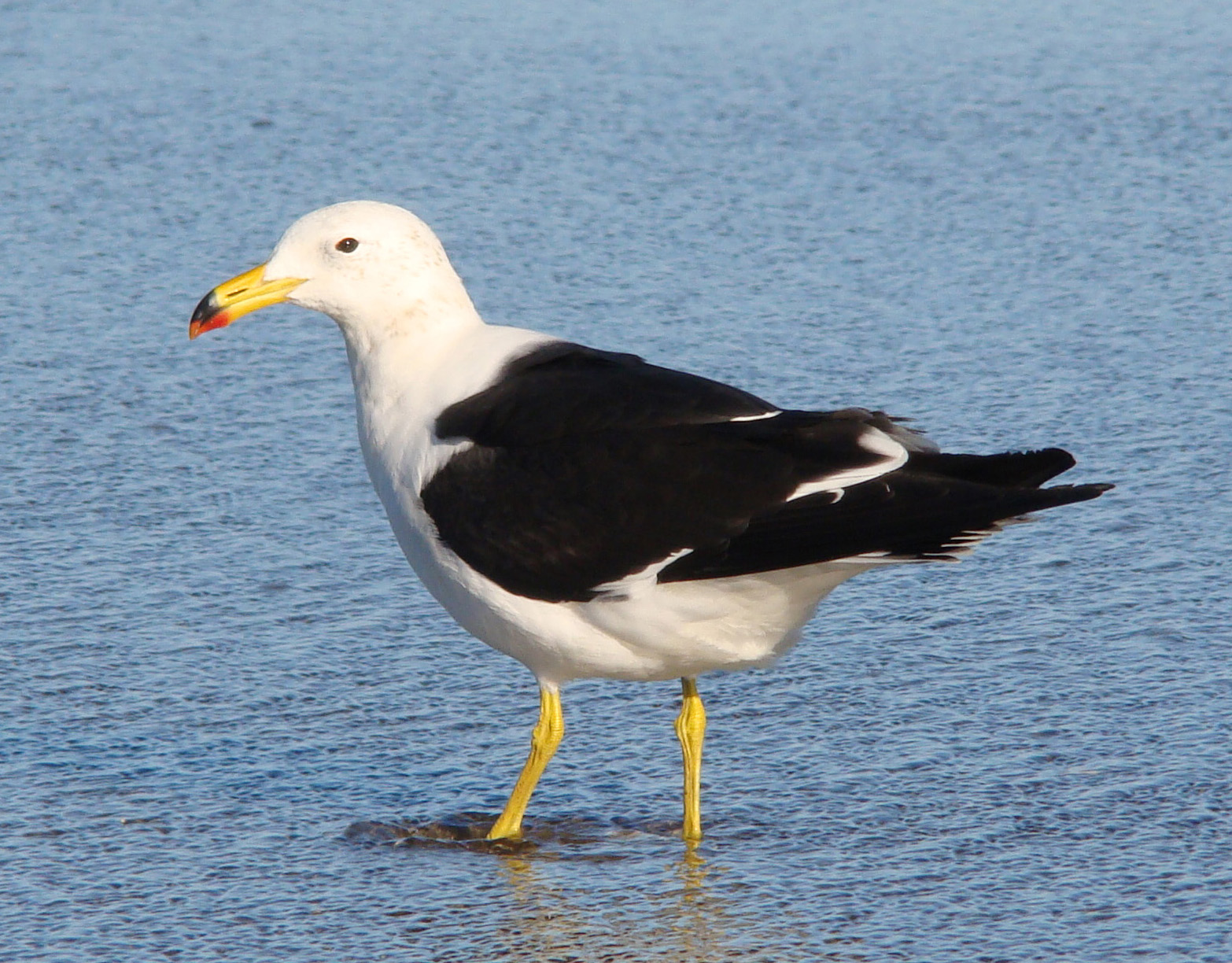
Great Black-backed Gull
Larus marinus
Photo: Wikimedia Commons (CC) via https://en.wikipedia.org/wiki/Great_black-backed_gull
Overview
A detailed profile for this species is sourced from the IUCN Red List of Threatened Species as assessments become available.
The Greater Black-backed Gull faces population declines primarily due to climate change impacts on marine food webs, which affect the availability of fish prey species. Coastal development and human disturbance at breeding colonies have reduced suitable nesting sites, while pollution from marine plastics and chemical contaminants bioaccumulate in their tissues. Competition with expanding populations of other seabird species for limited breeding territories has further pressured remaining colonies.
Habitat
Greater Black-backed Gulls inhabit rocky coastal cliffs, offshore islands, and estuarine environments across the North Atlantic. They nest on cliff ledges, rocky outcrops, and increasingly on rooftops in urban coastal areas, while foraging in marine waters, intertidal zones, and coastal wetlands.
Other threatened species in Laridae


Frequently asked questions
Why is Great Black-backed Gull classified as Vulnerable?
Where does Great Black-backed Gull live?
What are the main threats to Great Black-backed Gull?
Get weekly conservation intelligence
One short digest a week of the most striking species and country data we ship, plus breaking conservation news paired with our database where it matters.
Free, no spam. One-click unsubscribe in every email.