
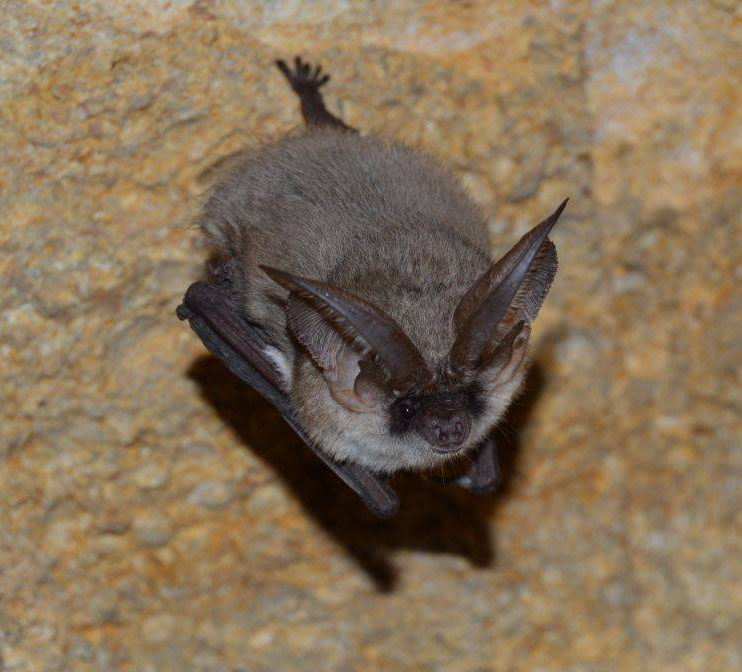
Geoffroy's Bat
Myotis emarginatus
Photo: Wikimedia Commons (CC) via https://en.wikipedia.org/wiki/Geoffroy's_bat
Overview
A detailed profile for this species is sourced from the IUCN Red List of Threatened Species as assessments become available.
Geoffroy's Bat faces significant population declines across its European range due to the widespread loss and degradation of traditional roosting sites, particularly historic buildings, churches, and caves that undergo renovation or disturbance. Agricultural intensification has severely reduced insect prey availability through pesticide use and habitat simplification, while climate change is altering the timing of insect emergence, disrupting the species' carefully synchronized foraging patterns. Human disturbance at maternity roosts during the critical breeding season causes abandonment and reproductive failure, compounding population pressures.
Habitat
Geoffroy's Bat inhabits a diverse range of environments including deciduous and mixed woodlands, parklands, and agricultural landscapes with hedgerows and water features. The species roosts in warm locations such as church attics, historic buildings, tree hollows, and underground sites including caves and cellars, often forming large maternity colonies in summer.
Other threatened species in Vespertilionidae


Frequently asked questions
Why is Geoffroy's Bat classified as Vulnerable?
Where does Geoffroy's Bat live?
What are the main threats to Geoffroy's Bat?
Get weekly conservation intelligence
One short digest a week of the most striking species and country data we ship, plus breaking conservation news paired with our database where it matters.
Free, no spam. One-click unsubscribe in every email.