
Fjeld-blegskivelav
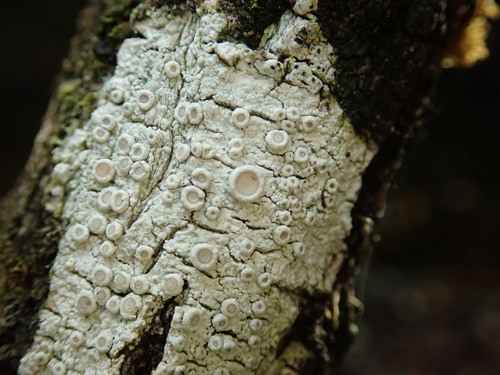
Ochrolechia frigida
Photo: Wikimedia Commons (CC) via https://en.wikipedia.org/wiki/Ochrolechia_frigida
Overview
Ochrolechia frigida is a species of lichen belonging to the family Ochrolechiaceae. It was first formally described by Olof Peter Swartz in 1781, as Lichen frigidus. Bernt Arne Lynge transferred it to Ochrolechia in 1928.
Ochrolechia frigida is declining primarily due to climate change impacts on its specialized Arctic and alpine habitats. Rising temperatures and changing precipitation patterns are altering the delicate environmental conditions this cold-adapted lichen requires for survival and reproduction.
Habitat
In the United Kingdom, this lichen species grows primarily among mosses and spreads over low-growing vegetation on high moorlands and mountain summits. It occasionally appears on coastal heathlands, though this habitat is uncommon for the species. It occurs frequently throughout Scotland and extends southward into northern England and the Snowdonia region of Wales.
Ochrolechia frigida is a known...
Other threatened species in Ochrolechiaceae

Frequently asked questions
Why is Fjeld-blegskivelav classified as Endangered?
Where does Fjeld-blegskivelav live?
What are the main threats to Fjeld-blegskivelav?
Get weekly conservation intelligence
One short digest a week of the most striking species and country data we ship, plus breaking conservation news paired with our database where it matters.
Free, no spam. One-click unsubscribe in every email.