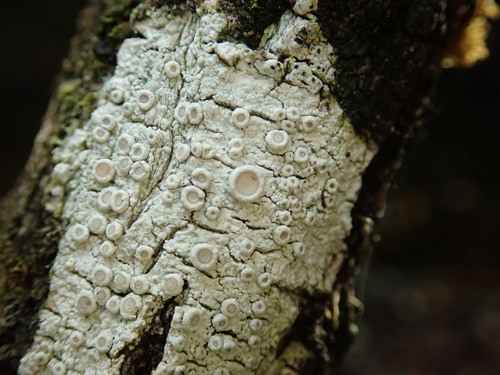
bleikkorkje
Ochrolechia pallescens
Photo: iNaturalist: (c) Melissa Hutchison, some rights reserved (CC BY-NC-ND), uploaded by Melissa Hutchison
Overview
Ochrolechia pallescens is a crustose lichen species characterized by its pale, whitish to cream-colored thallus that forms thin, smooth crusts on substrates. This lichen plays an important ecological role as a pioneer species in harsh environments and contributes to soil formation and nutrient cycling in its ecosystems.
Ochrolechia pallescens faces severe decline primarily due to air pollution, particularly nitrogen deposition and sulfur compounds that alter the chemical composition of its substrate. Habitat loss from urbanization and changes in forest management practices have further reduced suitable environments for this sensitive lichen species.
Habitat
Ochrolechia pallescens typically grows on acidic rock surfaces, particularly on siliceous stones and boulders in exposed montane and subalpine environments. The species is often found on weathered granite, quartzite, and similar hard rock substrates in areas with clean air and minimal human disturbance.
Other threatened species in Ochrolechiaceae


Frequently asked questions
Why is bleikkorkje classified as Endangered?
Where does bleikkorkje live?
What are the main threats to bleikkorkje?
Get weekly conservation intelligence
One short digest a week of the most striking species and country data we ship, plus breaking conservation news paired with our database where it matters.
Free, no spam. One-click unsubscribe in every email.