
Five-spot Burnet
Zygaena trifolii
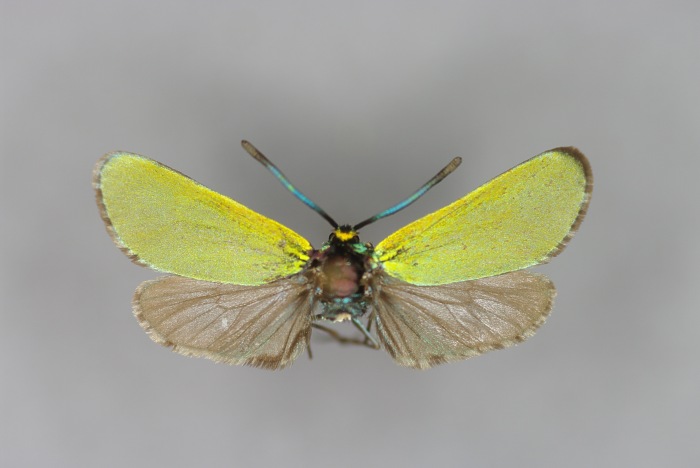
Photo: Wikimedia Commons (CC) via https://en.wikipedia.org/wiki/Zygaena_trifolii
Overview
Zygaena trifolii, the five-spot burnet, is a day-flying moth in the family Zygaenidae found in North Africa and Europe. It was described by the German zoologist Eugenius Johann Christoph Esper in 1783 from the type specimen found in Frankfurt am Main, Germany.
The Five-spot Burnet (Zygaena trifolii) faces severe population declines primarily due to habitat loss and fragmentation of its specialized coastal grassland and dune ecosystems. Agricultural intensification, coastal development, and changes in traditional grazing management have eliminated or degraded much of its remaining habitat, while climate change poses additional pressures on this already restricted species.
Habitat
It is found in North Africa (Algeria, Morocco and Tunisia through the western Mediterranean, Great Britain and central Europe to Ukraine. It is not found in Scandinavia.
Other threatened species in Zygaenidae


Frequently asked questions
Why is Five-spot Burnet classified as Critically Endangered?
Where does Five-spot Burnet live?
What are the main threats to Five-spot Burnet?
Get weekly conservation intelligence
One short digest a week of the most striking species and country data we ship, plus breaking conservation news paired with our database where it matters.
Free, no spam. One-click unsubscribe in every email.