
Bronze Forester
Jordanita chloros
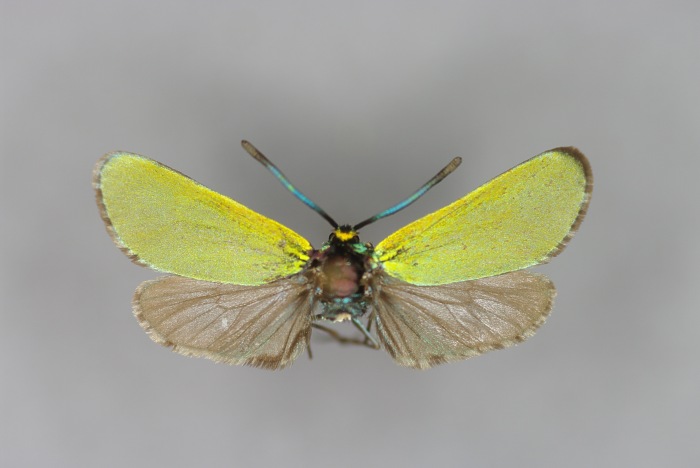
Photo: Wikimedia Commons (CC) via https://en.wikipedia.org/wiki/Jordanita_chloros
Overview
The Bronze Forester is a small day-flying moth with distinctive metallic bronze-green forewings that shimmer in sunlight. This species belongs to the Zygaenidae family and plays an important role as a pollinator of wildflowers while its caterpillars feed on specific host plants in grassland ecosystems.
The Bronze Forester (Jordanita chloros) is critically endangered primarily due to habitat loss and degradation of its specialized coastal grassland and cliff-top environments. The species has an extremely restricted range and small population size, making it highly vulnerable to environmental changes and human disturbance in its limited habitat.
Habitat
Bronze Foresters inhabit species-rich chalk downlands, limestone grasslands, and coastal clifftop meadows where their larval host plants thrive. They require areas with a mosaic of short-grazed turf interspersed with patches of longer grass and abundant wildflowers for nectar sources.
Other threatened species in Zygaenidae


Frequently asked questions
Why is Bronze Forester classified as Critically Endangered?
Where does Bronze Forester live?
What are the main threats to Bronze Forester?
Get weekly conservation intelligence
One short digest a week of the most striking species and country data we ship, plus breaking conservation news paired with our database where it matters.
Free, no spam. One-click unsubscribe in every email.