
Kaputar Rock Skink
Egernia roomi
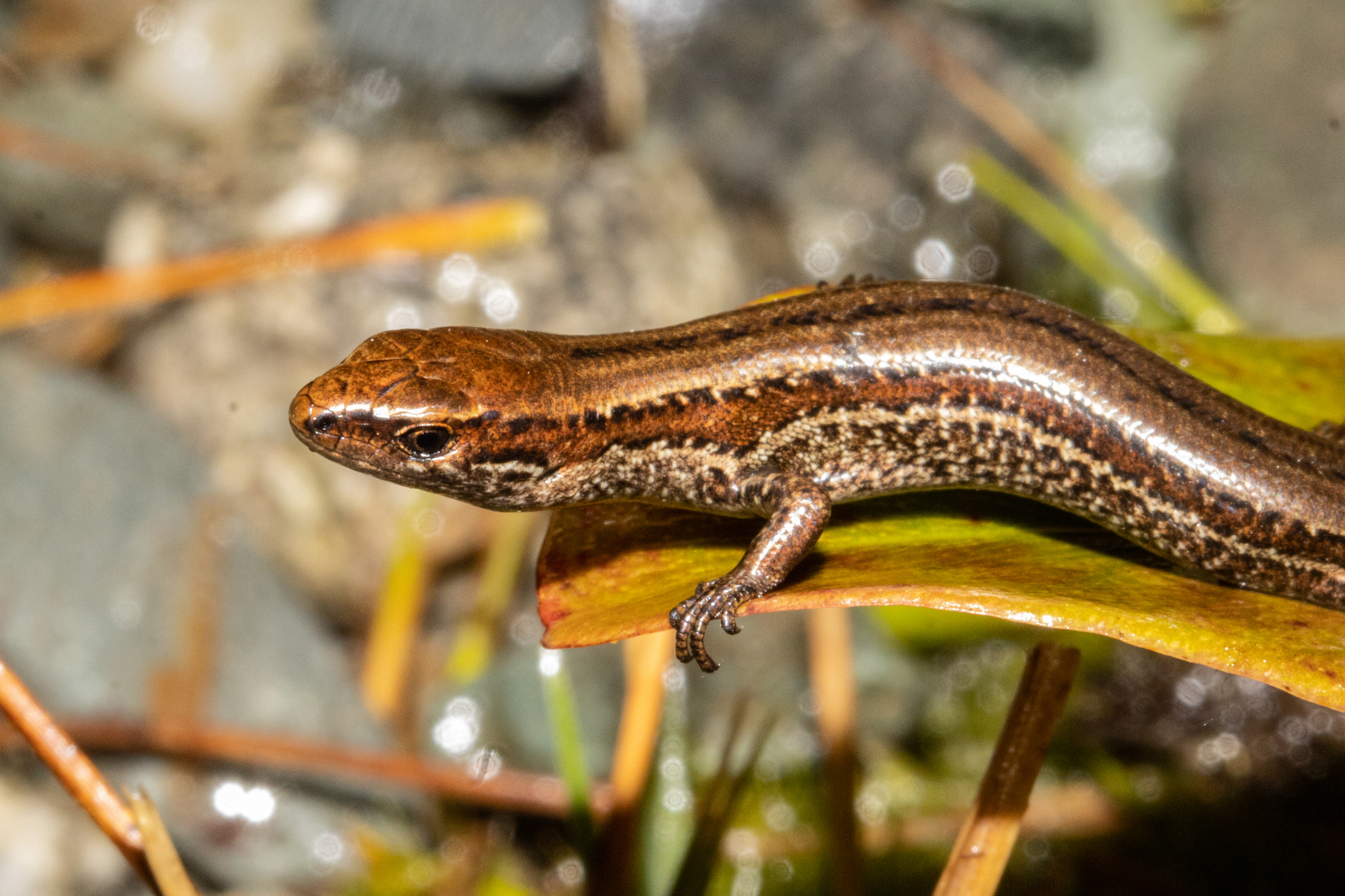
Photo: Photo: Wikimedia Commons, CC BY-SA
Overview
The Kaputar Rock Skink (Egernia roomi) is a robust, medium-sized skink restricted to the rocky summit environments of the Nandewar Range in northern New South Wales, Australia. Adults display a dark brown to blackish body with rough, keeled scales that provide excellent grip on the volcanic boulder fields they inhabit, and their thickset build and short limbs reflect a life spent wedged into rock crevices rather than roaming open ground. This species is classified as Critically Endangered (CR) by the IUCN, reflecting its extraordinarily restricted range, which is confined almost entirely to the high-elevation rocky outcrops of Mount Kaputar National Park.
Like other members of the Egernia group, it is believed to be viviparous and likely exhibits some degree of social structure, sheltering in family groups within deep rock fissures that buffer it from temperature extremes and predators. Its diet is thought to consist of invertebrates and plant matter foraged among the boulders and surrounding vegetation. The skink's entire known distribution lies within a single mountain massif, making it exceptionally vulnerable to localized catastrophic events.
On a more encouraging note, its confinement within Mount Kaputar National Park means the species benefits from formal park protection status and reduced direct human disturbance, and targeted post-fire monitoring efforts have improved understanding of surviving populations in the years following major disturbance events. Continued survey work and habitat protection within the park offer a genuine pathway to securing the species' long-term persistence, provided threats to its rocky refuge habitat are actively managed.
The Kaputar Rock Skink's entire population is confined to the rocky summit habitat of a single mountain range, making it acutely vulnerable to severe bushfires, which have already burned through significant portions of its range in recent years. Post-fire changes to vegetation structure and rock-surface microclimates can reduce shelter availability and food resources within its already tiny range. Predation by introduced species such as feral cats further compounds pressure on the small, fragmented rock-crevice populations that remain.
Habitat
This skink is restricted to high-elevation rocky boulder fields and volcanic outcrops atop the Nandewar Range in Mount Kaputar National Park, New South Wales, where it shelters within deep rock crevices.
Conservation measures underway
Other threatened species in SCINCIDAE

Threatened in Australia
Frequently asked questions
Why is Kaputar Rock Skink classified as Critically Endangered?
Where does Kaputar Rock Skink live?
What are the main threats to Kaputar Rock Skink?
Get weekly conservation intelligence
One short digest a week of the most striking species and country data we ship, plus breaking conservation news paired with our database where it matters.
Free, no spam. One-click unsubscribe in every email.