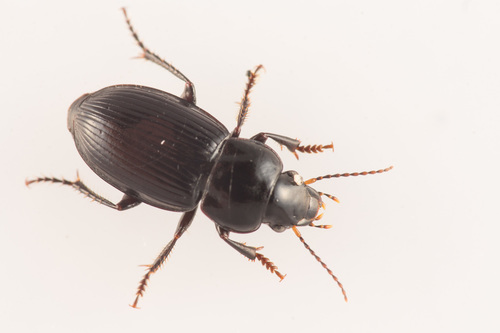
Harpalus neglectus
Photo: iNaturalist: (c) Andreas Bennetsen Boe, some rights reserved (CC BY-NC-ND), uploaded by Andreas Bennetsen Boe
Overview
Harpalus neglectus is a species of ground beetle native to Europe, where it can be found in such territories as Belgium, Bulgaria, Croatia, Czech Republic, France, Germany, Great Britain including the Isle of Man, Ireland, Italy, Moldova, Poland, Portugal, Sardinia, Spain, Sweden, the Netherlands and Ukraine. It is doubtful that the beetle exists in Austria, Slovakia and Switzerland. It is also found in such African countries as Algeria, Morocco, and Tunisia.
Harpalus neglectus, a ground beetle species, faces severe population decline primarily due to habitat loss and degradation of its specialized coastal and sandy environments. Agricultural intensification and urban development have fragmented remaining suitable habitats, while changes in land management practices have altered the ecological conditions this species requires for survival.
Habitat
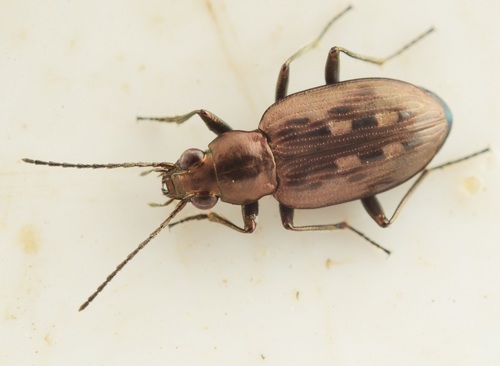
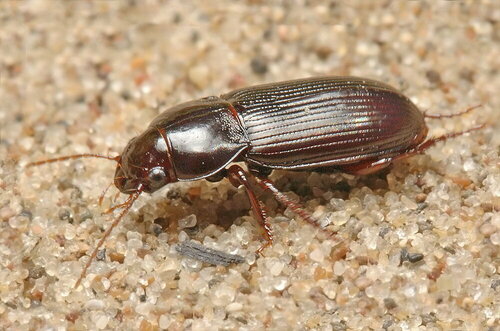
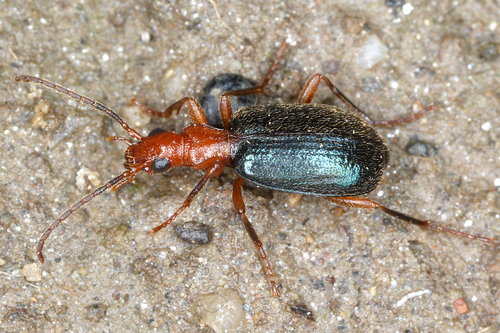
Other threatened species in Carabidae

Frequently asked questions
Why is Harpalus neglectus classified as Critically Endangered?
Where does Harpalus neglectus live?
What are the main threats to Harpalus neglectus?
Get weekly conservation intelligence
One short digest a week of the most striking species and country data we ship, plus breaking conservation news paired with our database where it matters.
Free, no spam. One-click unsubscribe in every email.