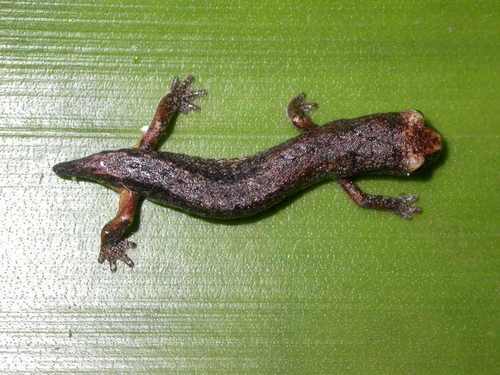
Dwarf False Brook Salamander
Ixalotriton parvus
Photo: Photo: (c) 2007 Theodore Papenfuss, some rights reserved (CC BY-NC)
Overview
A detailed profile for this species is sourced from the IUCN Red List of Threatened Species as assessments become available.
Ixalotriton parvus faces severe threats from habitat destruction due to agricultural expansion and logging activities in its limited montane forest range. The species' extremely restricted distribution makes it particularly vulnerable to local environmental changes, while climate change poses additional risks by altering the cool, humid conditions essential for its survival. Water pollution from agricultural runoff and human settlements further degrades the pristine stream habitats this salamander requires for reproduction.
Habitat
This critically endangered salamander inhabits cool, humid montane forests at elevations between 1,800-2,400 meters in the Sierra Madre Oriental of Mexico. It requires pristine mountain streams and adjacent leaf litter in cloud forest environments with consistent moisture and stable temperatures.
Conservation measures underway
Other threatened species in PLETHODONTIDAE


Threatened in Mexico
Frequently asked questions
Why is Dwarf False Brook Salamander classified as Critically Endangered?
Where does Dwarf False Brook Salamander live?
What are the main threats to Dwarf False Brook Salamander?
Get weekly conservation intelligence
One short digest a week of the most striking species and country data we ship, plus breaking conservation news paired with our database where it matters.
Free, no spam. One-click unsubscribe in every email.