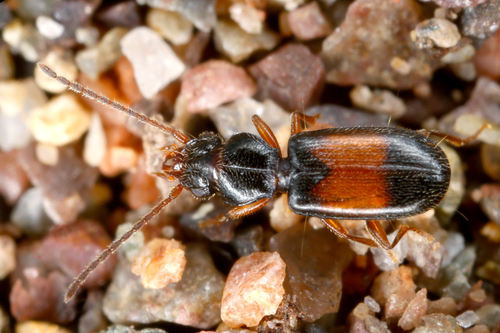
Ground beetle
Perileptus areolatus
Photo: iNaturalist: (c) gernotkunz, all rights reserved, uploaded by gernotkunz
Overview
Perileptus areolatus is a species of brown coloured ground beetle in the Trechinae subfamily.
Perileptus areolatus faces severe population decline primarily due to habitat loss and degradation of its specialized coastal and wetland environments. Climate change and sea level rise pose additional threats to its remaining fragmented populations, while human development continues to reduce available breeding and foraging areas.
Habitat
The species can be found everywhere in Europe except for Andorra, Finland, Lithuania, Monaco, San Marino and Vatican City. The species can also be found in Asia in such countries as Armenia, Azerbaijan, Georgia, Iran, Iraq, Israel, Saudi Arabia, Syria, Turkey, and in Africa in Tunisia and the Canary Islands.
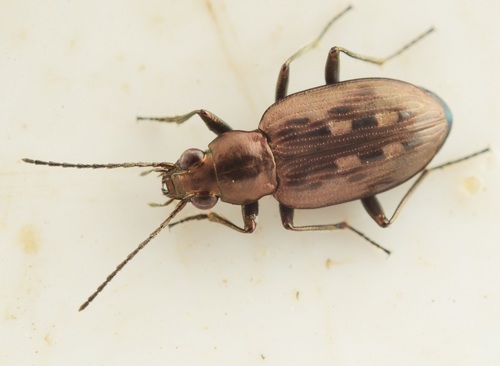
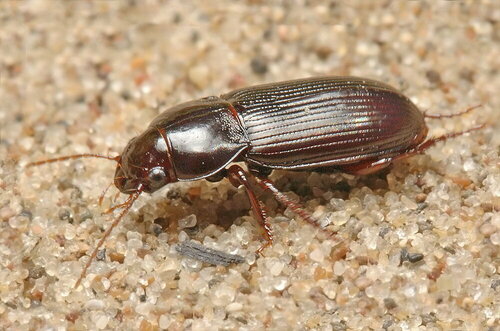
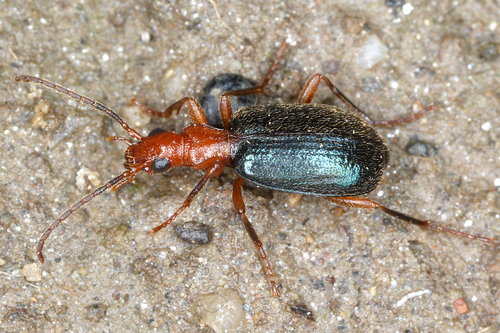
Other threatened species in Carabidae

Frequently asked questions
Why is Ground beetle classified as Critically Endangered?
Where does Ground beetle live?
What are the main threats to Ground beetle?
Get weekly conservation intelligence
One short digest a week of the most striking species and country data we ship, plus breaking conservation news paired with our database where it matters.
Free, no spam. One-click unsubscribe in every email.