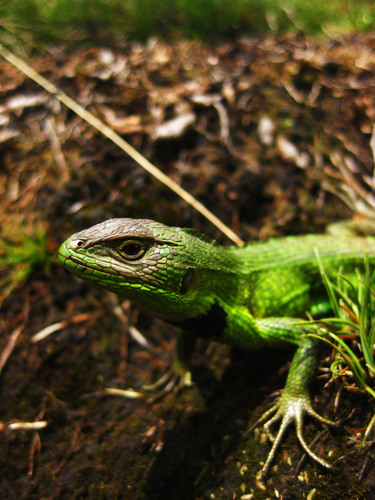
Stenocercus trachycephalus
Local name: Duméril's Whorltail Iguana
Photo: iNaturalist: (c) Diegophidio, all rights reserved, uploaded by Diegophidio
Overview
Stenocercus trachycephalus, Duméril's whorltail iguana, is a species of lizard of the family Tropiduridae. It is found in Colombia.
Duméril's Whorltail Iguana faces significant pressure from habitat loss and fragmentation due to agricultural expansion and urban development throughout its range in the Andes. Mining activities and infrastructure development further degrade its specialized montane habitats, while climate change threatens to shift suitable temperature and precipitation zones beyond the species' adaptive capacity.
Habitat
This species inhabits montane cloud forests, humid Andean slopes, and adjacent scrublands at elevations between 1,500-3,000 meters. It typically occurs in areas with dense vegetation cover, rocky outcrops, and high humidity levels characteristic of Andean cloud forest ecosystems.
Threatened in Colombia
Frequently asked questions
Why is Duméril's Whorltail Iguana classified as Vulnerable?
Where does Duméril's Whorltail Iguana live?
What are the main threats to Duméril's Whorltail Iguana?
Get weekly conservation intelligence
One short digest a week of the most striking species and country data we ship, plus breaking conservation news paired with our database where it matters.
Free, no spam. One-click unsubscribe in every email.