Dracocephalum ruyschiana
ENEndangered

Dracocephalum ruyschiana

Local name: Dracocéphale de Ruysch, Tête-de-dragon de Ruysch

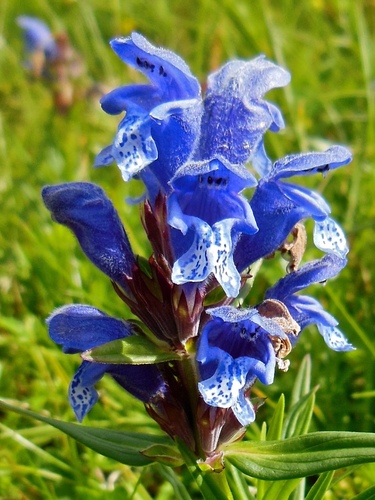
Dracocephalum ruyschiana is a perennial herbaceous plant in the mint family, characterized by its distinctive blue-violet tubular flowers arranged in dense terminal spikes and deeply divided, narrow leaves. This arctic-alpine species plays an important ecological role as a nectar source for specialized pollinators including bumblebees and butterflies in harsh northern environments.

Photo: iNaturalist: (c) Karsten Rohweder, some rights reserved (CC BY), uploaded by Karsten Rohweder

01Classification

Taxonomy & Classification

Kingdom

Plantae

Phylum

Tracheophyta

Class

Magnoliopsida

Order

Lamiales

Family

Lamiaceae

Genus

Dracocephalum

Dracocephalum ruyschiana belongs to the family Lamiaceae, order Lamiales, within the Magnoliopsida class.

02Description

Species Profile

Dracocephalum ruyschiana is a perennial herbaceous plant in the mint family, characterized by its distinctive blue-violet tubular flowers arranged in dense terminal spikes and deeply divided, narrow leaves. This arctic-alpine species plays an important ecological role as a nectar source for specialized pollinators including bumblebees and butterflies in harsh northern environments. The plant typically grows 10-40 cm tall and forms small colonies through underground rhizomes.

Dracocephalum ruyschiana is declining primarily due to habitat loss and degradation from agricultural expansion, urban development, and changes in traditional land management practices. The species' fragmented populations are also vulnerable to genetic isolation and local extinctions due to its specialized habitat requirements and limited dispersal ability.

Key Facts

IUCN StatusEndangered (EN)
GroupPlants
03Habitat

Habitat & Distribution

Dracocephalum ruyschiana inhabits dry, rocky slopes, alpine meadows, and tundra environments at high elevations, typically growing in well-drained calcareous soils. The species is found in harsh arctic and subarctic conditions where it tolerates extreme temperature fluctuations and short growing seasons.

04Threats

Threats

!

IUCN Red List: Endangered

Dracocephalum ruyschiana is declining primarily due to habitat loss and degradation from agricultural expansion, urban development, and changes in traditional land management practices. The species' fragmented populations are also vulnerable to genetic isolation and local extinctions due to its specialized habitat requirements and limited dispersal ability.

Agricultural expansion and intensification

HighOngoing

Urban development and infrastructure

HighOngoing

Abandonment of traditional grazing practices

MediumOngoing

Climate change impacts on suitable habitat

MediumOngoing

Habitat fragmentation

MediumOngoing
07National Status

National vs Global Threat Status

How this species is assessed at the national level compared to its IUCN global status (EN).

CountryNational StatusGlobal StatusComparison
EULCLeast ConcernENEndangeredLower local risk

National Red List data sourced from the National Red List Project (nationalredlist.org, ZSL) and country-specific Red List authorities.

Community

Community Sightings

Report a sighting

No community sightings yet. Be the first to report!

07Sources

Sources & Attribution

How to Cite

IUCN: IUCN (2025). The IUCN Red List of Threatened Species. Version 2025-1. Available at: https://www.iucnredlist.org. doi:10.2305/IUCN.UK.2025-1.RLTS

GBIF: GBIF.org (2025). GBIF Home Page. Available at: https://www.gbif.org

National Red Lists: ZSL (2025). National Red List. Zoological Society of London. Available at: https://www.nationalredlist.org

This page: SpeciesRadar (2025). Dracocephalum ruyschiana (Dracocephalum ruyschiana). SpeciesRadar: Intelligence for Earth's Biodiversity. Available at: https://speciesradar.org/species/dracocephale-de-ruysch-tete-de-dragon-de-ruysch

Full citation guide & data usage terms