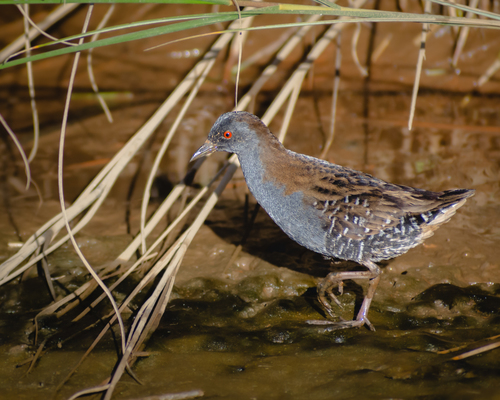
Dot-winged crake
Porzana spiloptera
Photo: iNaturalist: (c) Katherine Sanhueza Bravo, some rights reserved (CC BY-NC), uploaded by Katherine Sanhueza Bravo
Overview
The dot-winged crake is a near threatened species of bird in subfamily Rallinae of family Rallidae, the rails, gallinules, and coots. It is found in Argentina, Brazil, Chile, and Uruguay.
The Dot-winged Crake faces severe population declines primarily due to widespread habitat loss and degradation of wetland ecosystems throughout its range in South America. Agricultural expansion, urban development, and drainage of marshlands for cattle ranching have significantly reduced available breeding and foraging areas.
Habitat
The dot-winged crake's distribution is unsettled. The IOC and Clements place it in southern Uruguay and northern Argentina.
The dot-winged crake inhabits freshwater and brackish waters and some drier landscapes as well. It is found in freshwater and tidal marshes, swamps, wet meadows, grasslands, and riparian scrub.
Other threatened species in Rallidae



Frequently asked questions
Why is Dot-winged crake classified as Endangered?
Where does Dot-winged crake live?
What are the main threats to Dot-winged crake?
Get weekly conservation intelligence
One short digest a week of the most striking species and country data we ship, plus breaking conservation news paired with our database where it matters.
Free, no spam. One-click unsubscribe in every email.