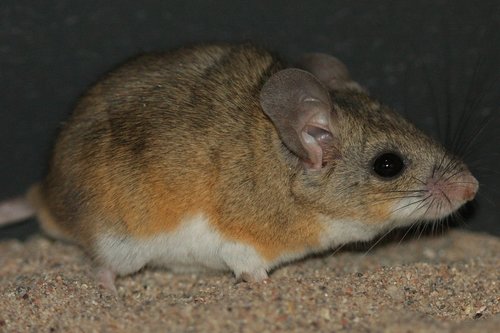
Peromyscus dickeyi
Local name: Dickey’s Deermouse
Overview
A detailed profile for this species is sourced from the IUCN Red List of Threatened Species as assessments become available.
Peromyscus dickeyi faces severe threats from habitat destruction due to agricultural expansion and urban development on San Pedro Nolasco Island. The species' extremely limited range makes it vulnerable to introduced predators, particularly feral cats and rats that compete for resources and prey on juveniles. Climate change poses additional risks through altered precipitation patterns affecting the island's fragile desert scrub ecosystem.
Habitat
This endemic deer mouse inhabits the arid desert scrub and rocky outcrops of San Pedro Nolasco Island in the Gulf of California, Mexico. The species occupies areas with sparse vegetation dominated by cacti and drought-resistant shrubs, typically at elevations below 300 meters.
Other threatened species in CRICETIDAE
Threatened in Mexico
Frequently asked questions
Why is Dickey’s Deermouse classified as Vulnerable?
Where does Dickey’s Deermouse live?
What are the main threats to Dickey’s Deermouse?
Get weekly conservation intelligence
One short digest a week of the most striking species and country data we ship, plus breaking conservation news paired with our database where it matters.
Free, no spam. One-click unsubscribe in every email.