
Diamond Firetail
Stagonopleura guttata
Photo: Wikimedia Commons (CC) via https://en.wikipedia.org/wiki/Diamond_firetail
Overview
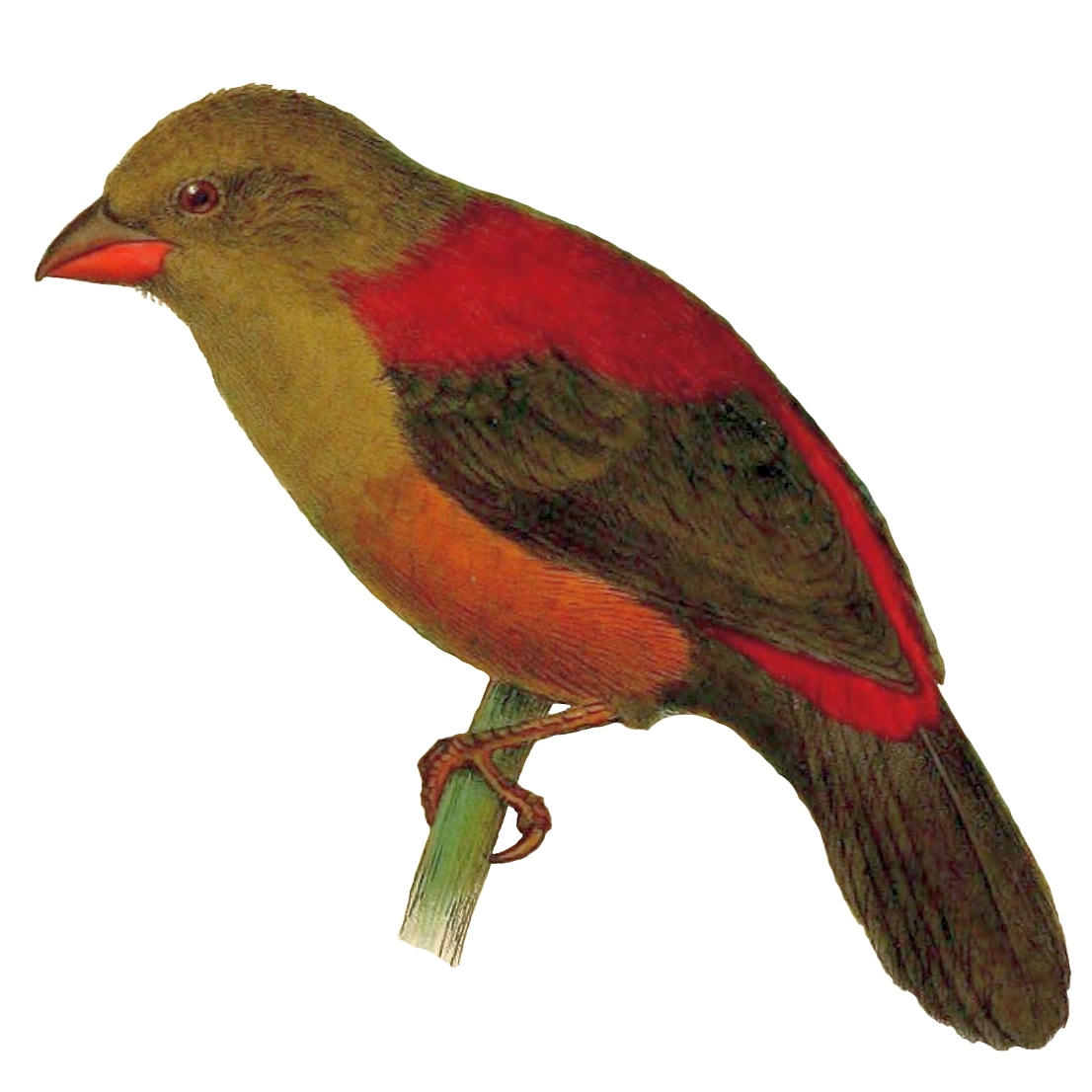
A small, striking finch, the Diamond Firetail is best recognised by its scarlet rump, grey head, black band across the breast, and pale underparts marked with distinctive white-spotted black flanks — the "diamond" pattern that gives the species its name. Gregarious and often seen in small flocks outside breeding season, it forages primarily on the ground for grass and herb seeds, supplementing its diet with insects during breeding periods. As a seed disperser and grassland invertebrate predator, it plays a minor but consistent role in maintaining the trophic dynamics of the temperate woodland-grassland ecosystems it inhabits.
The species is endemic to Australia, occurring across south-eastern regions including parts of Victoria, New South Wales, South Australia and Tasmania. It favours open grassy woodlands, grassland edges, and lightly timbered farmland, typically nesting in shrubs or low trees near open foraging ground.
Its decline is driven by the conversion and intensification of grassland habitat for livestock grazing, which removes native grass seed sources and nesting cover. Illegal trapping for the aviary trade continues to affect wild populations. Altered fire regimes — both increased frequency from land management and suppression that changes vegetation structure — degrade nesting and foraging habitat.
Predation and competition from introduced species, including cats and aggressive honeyeaters that displace firetails from remnant habitat, compound these pressures.
Conservation responses include habitat protection and restoration programs targeting remnant grassy woodland, revegetation initiatives linking fragmented populations, and regional monitoring programs tracking population trends. Some jurisdictions have introduced grazing management guidelines on conservation land.
The population continues to decline, and ongoing habitat loss combined with ecological pressures from invasive species suggest the species will remain reliant on active habitat management and monitoring to avoid further range contraction.
The Diamond Firetail is threatened mainly by the clearing and degradation of its grassland and woodland habitat for livestock grazing, along with being captured or trapped by people, likely for the cage-bird trade. Frequent or poorly managed fires also destroy the grassy understory and seed sources this bird depends on for food and shelter, while competition from introduced species like other birds or grazing animals adds further pressure. These threats appear to be ongoing and stable, rather than clearly increasing or decreasing.
Habitat
Conservation measures underway
Other threatened species in ESTRILDIDAE
Threatened in Australia
Frequently asked questions
Why is Diamond Firetail classified as Vulnerable?
Where does Diamond Firetail live?
What are the main threats to Diamond Firetail?
Get weekly conservation intelligence
One short digest a week of the most striking species and country data we ship, plus breaking conservation news paired with our database where it matters.
Free, no spam. One-click unsubscribe in every email.