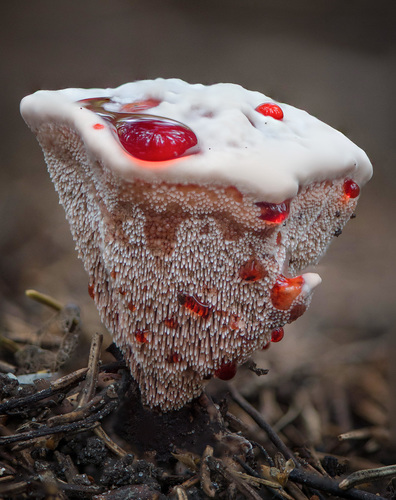
Devil's Tooth
Hydnellum peckii
Photo: iNaturalist: (c) Morten Ross, some rights reserved (CC BY), uploaded by Morten Ross
Overview
Hydnellum peckii is a fungus in the genus Hydnellum of the family Bankeraceae. The unusual appearance of the young fruit bodies has earned the species several descriptive common names, including strawberries and cream, the bleeding Hydnellum, the bleeding tooth fungus, the red-juice tooth, and the Devil's tooth.
Devil's Tooth (Hydnellum peckii) is declining primarily due to habitat loss from deforestation and forest fragmentation, which destroys the old-growth coniferous forests it requires. Additionally, air pollution, particularly nitrogen deposition, alters soil chemistry and disrupts the delicate mycorrhizal relationships this fungus depends on for survival.
Habitat
Hydnellum peckii is a mycorrhizal fungus, and as such establishes a mutualistic relationship with the roots of certain trees (referred to as "hosts"), in which the fungus exchanges minerals and amino acids extracted from the soil for fixed carbon from the host. The subterranean hyphae of the fungus grow a sheath of tissue around the rootlets of a broad range of tree species, in an intimate...
Other threatened species in Bankeraceae


Frequently asked questions
Why is Devil's Tooth classified as Endangered?
Where does Devil's Tooth live?
What are the main threats to Devil's Tooth?
Get weekly conservation intelligence
One short digest a week of the most striking species and country data we ship, plus breaking conservation news paired with our database where it matters.
Free, no spam. One-click unsubscribe in every email.