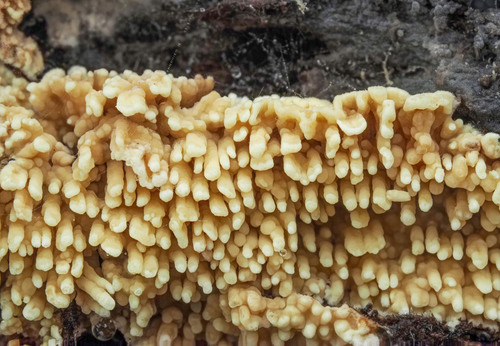
Dentists' Bane
Cristinia eichleri
Photo: iNaturalist: (c) Filip Fuljer, some rights reserved (CC BY-NC), uploaded by Filip Fuljer
Overview
Dentists' Bane (Cristinia eichleri) is a distinctive succulent plant characterized by its thick, crystalline-textured leaves that form dense rosettes and produce small white flowers with remarkably hard, tooth-like projections. This hardy perennial serves as a crucial pioneer species in disturbed soils, helping to stabilize erosion-prone areas while providing nectar for specialized pollinators during its brief flowering period.
Cristinia eichleri faces significant pressure from habitat loss due to agricultural expansion and urban development throughout its range. The species' specialized habitat requirements and limited distribution make it particularly vulnerable to environmental changes and human encroachment.
Habitat
This species inhabits specialized rocky outcrops, cliff faces, and associated vegetation communities in semi-arid regions. It shows particular preference for areas with specific geological formations and microclimatic conditions that support its unique ecological requirements.
Other threatened species in Stephanosporaceae
Frequently asked questions
Why is Dentists' Bane classified as Vulnerable?
Where does Dentists' Bane live?
What are the main threats to Dentists' Bane?
Get weekly conservation intelligence
One short digest a week of the most striking species and country data we ship, plus breaking conservation news paired with our database where it matters.
Free, no spam. One-click unsubscribe in every email.