Athelidium aurantiacum
Overview
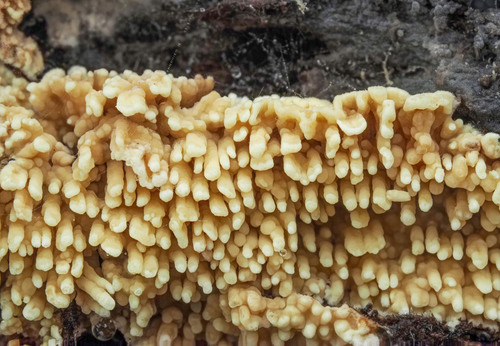
Goldgelber Rindenpilz (Athelidium aurantiacum) is a distinctive corticioid fungus characterized by its bright golden-yellow to orange resupinate fruiting bodies that form thin, waxy crusts on bark surfaces. This saprotrophic species plays a crucial ecological role in forest ecosystems by decomposing dead wood and contributing to nutrient cycling in woodland environments.
Goldgelber Rindenpilz (Athelidium aurantiacum) is declining primarily due to habitat loss from deforestation and forest fragmentation in its native European range. The species is particularly vulnerable to changes in forest composition and the loss of its specific host trees, which limits its ability to establish and maintain viable populations.
Habitat
Athelidium aurantiacum grows exclusively on the bark of dead or dying deciduous trees, particularly favoring old-growth and mature forest stands with abundant coarse woody debris. The species requires humid, shaded microenvironments typically found in undisturbed woodland areas with stable moisture conditions.
Other threatened species in Stephanosporaceae
Frequently asked questions
Why is Athelidium aurantiacum classified as Endangered?
Where does Athelidium aurantiacum live?
What are the main threats to Athelidium aurantiacum?
Get weekly conservation intelligence
One short digest a week of the most striking species and country data we ship, plus breaking conservation news paired with our database where it matters.
Free, no spam. One-click unsubscribe in every email.