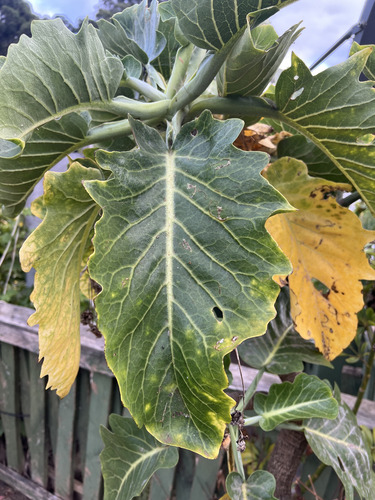
Dendroseris macrantha
Photo: (c) Jaime Rojas Benavides, some rights reserved (CC BY-NC), uploaded by Jaime Rojas Benavides
Overview
Sonchus sinuatus, synonym Dendroseris macrantha, is a species of flowering plant in the family Asteraceae. It is endemic to the Juan Fernández Islands of Chile. It is threatened by habitat loss.
Dendroseris macrantha faces severe threats from invasive plant species that outcompete native vegetation and alter soil chemistry on Juan Fernández Islands. Habitat degradation from introduced herbivores, particularly goats and rabbits, has severely reduced suitable growing areas. The species' extremely limited range makes it vulnerable to stochastic events and climate-related changes affecting the island's unique ecosystem.
Habitat
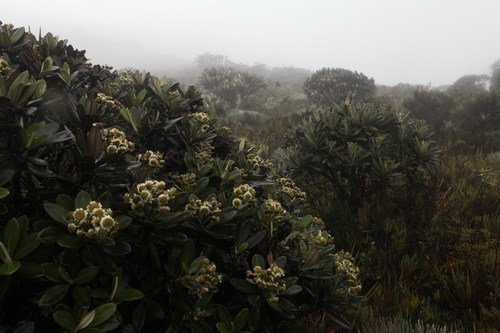
This endemic species inhabits the temperate rainforest and cloud forest zones of the Juan Fernández Islands, typically growing in moist, well-drained soils at elevations between 400-600 meters. It occurs in areas with high humidity and frequent fog, often associated with native Myrceugenia fernandeziana forests.
Conservation measures underway
Other threatened species in ASTERACEAE
Frequently asked questions
Why is Dendroseris macrantha classified as Critically Endangered?
Where does Dendroseris macrantha live?
What are the main threats to Dendroseris macrantha?
Get weekly conservation intelligence
One short digest a week of the most striking species and country data we ship, plus breaking conservation news paired with our database where it matters.
Free, no spam. One-click unsubscribe in every email.