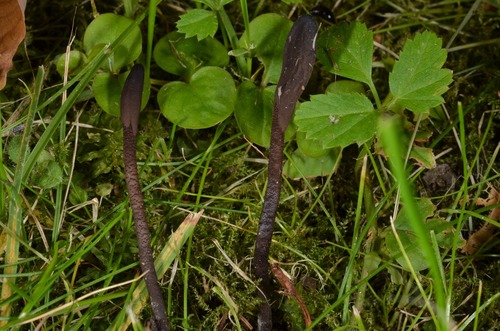
Deceptive Earthtongue
Geoglossum fallax
Photo: iNaturalist: (c) Eugene Popov, some rights reserved (CC BY), uploaded by Eugene Popov
Overview
The Deceptive Earthtongue is a distinctive club fungus characterized by its dark, tongue-like fruiting bodies that emerge from soil in grasslands and woodland edges. These slender, blackish structures can reach 2-8 cm in height and play a crucial role in nutrient cycling within their ecosystems. As a saprophytic species, it helps decompose organic matter and forms important associations with grassland plant communities.
Deceptive Earthtongue faces severe decline primarily due to habitat loss from agricultural intensification and grassland conversion, which destroys the nutrient-poor grasslands it requires. Climate change and nitrogen deposition further threaten remaining populations by altering soil chemistry and grassland composition.
Habitat
Deceptive Earthtongue typically inhabits unimproved grasslands, particularly chalk downs, old pastures, and grassy areas within deciduous woodlands where soil remains relatively undisturbed. The species shows a strong preference for calcareous soils with low nutrient levels and requires areas with diverse plant communities that have not been subjected to intensive agricultural practices.
Other threatened species in Geoglossaceae


Frequently asked questions
Why is Deceptive Earthtongue classified as Endangered?
Where does Deceptive Earthtongue live?
What are the main threats to Deceptive Earthtongue?
Get weekly conservation intelligence
One short digest a week of the most striking species and country data we ship, plus breaking conservation news paired with our database where it matters.
Free, no spam. One-click unsubscribe in every email.