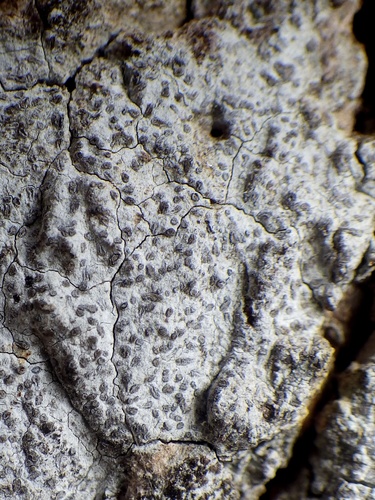
Lecanographa lyncea
Photo: iNaturalist: (c) zaca, some rights reserved (CC BY-NC), uploaded by zaca
Overview
Lecanographa lyncea is a crustose lichen species that forms thin, grayish-white to pale yellow crusts on bark surfaces. This inconspicuous lichen produces distinctive black, elongated fruiting bodies (lirellae) that appear as dark lines or scratches across its surface, giving it its common name daggklotterlav.
Lecanographa lyncea, a critically endangered lichen species, faces severe decline primarily due to habitat loss and degradation of its specialized forest ecosystems. Air pollution and climate change further threaten the sensitive environmental conditions this species requires for survival.
Habitat
Daggklotterlav grows exclusively on the smooth bark of mature deciduous trees, particularly favoring beech, maple, and ash trees in humid, old-growth forests. It requires stable microclimatic conditions with consistent moisture levels and minimal air pollution, typically found in undisturbed forest interiors away from agricultural or urban influences.
Other threatened species in Lecanographaceae
Frequently asked questions
Why is Lecanographa lyncea classified as Critically Endangered?
Where does Lecanographa lyncea live?
What are the main threats to Lecanographa lyncea?
Get weekly conservation intelligence
One short digest a week of the most striking species and country data we ship, plus breaking conservation news paired with our database where it matters.
Free, no spam. One-click unsubscribe in every email.