Pataikos Rainfrog
Pristimantis pataikos
Overview
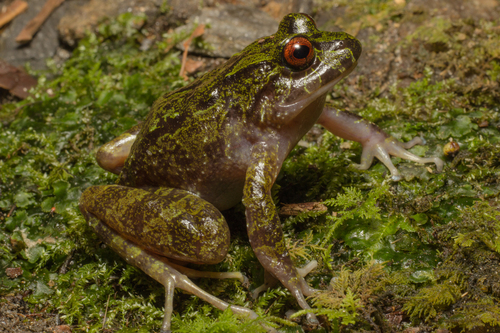
Pristimantis pataikos is a species of frog in the family Strabomantidae. It is known from two locations, one in the Amazonas Region in northern Peru and the other one in nearby Zamora-Chinchipe Province in southern Ecuador. Its natural habitat is tropical moist montane forest at elevations of 1,800–3,470 m (5,910–11,380 ft) asl. It is threatened by habitat loss. The location in Ecuador is within the Podocarpus National Park.
Cutín de Leimebamba faces significant threats from habitat loss due to agricultural expansion and deforestation in its limited montane cloud forest range. The species' restricted distribution in northern Peru makes it particularly vulnerable to environmental changes and human activities that fragment its specialized high-altitude habitat.
Habitat
This species inhabits montane cloud forests and elfin forests at elevations between 2,800-3,200 meters in the Cordillera Oriental of northern Peru. It occurs in humid, moss-covered forests with dense vegetation and persistent cloud cover typical of high-altitude Andean ecosystems.
Other threatened species in Craugastoridae


Threatened in Peru
Frequently asked questions
Why is Pataikos Rainfrog classified as Vulnerable?
Where does Pataikos Rainfrog live?
What are the main threats to Pataikos Rainfrog?
Get weekly conservation intelligence
One short digest a week of the most striking species and country data we ship, plus breaking conservation news paired with our database where it matters.
Free, no spam. One-click unsubscribe in every email.