Cut Notchwort
ENEndangered

Cut Notchwort

Tritomaria exsecta

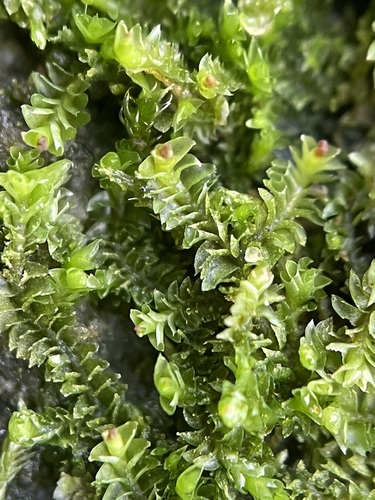
Cut Notchwort (Tritomaria exsecta) is a small leafy liverwort characterized by its distinctive deeply notched leaves that give the species its common name. This bryophyte forms small, dark green to brownish patches and plays an important ecological role in nutrient cycling and moisture retention in specialized microhabitats.

Photo: iNaturalist: (c) wolff christiane, some rights reserved (CC BY-NC), uploaded by wolff christiane

01Classification

Taxonomy & Classification

Kingdom

Plantae

Phylum

Marchantiophyta

Class

Jungermanniopsida

Order

Jungermanniales

Family

Lophoziaceae

Genus

Tritomaria

Cut Notchwort belongs to the family Lophoziaceae, order Jungermanniales, within the Jungermanniopsida class.

02Description

Species Profile

Cut Notchwort (Tritomaria exsecta) is a small leafy liverwort characterized by its distinctive deeply notched leaves that give the species its common name. This bryophyte forms small, dark green to brownish patches and plays an important ecological role in nutrient cycling and moisture retention in specialized microhabitats.

Cut Notchwort (Tritomaria exsecta) is declining primarily due to habitat loss and degradation of its specialized bryophyte communities. Climate change and atmospheric pollution are altering the delicate moisture and chemical conditions required for this liverwort's survival, while human activities continue to fragment and destroy suitable habitats.

Key Facts

IUCN StatusEndangered (EN)
GroupPlants
03Habitat

Habitat & Distribution

Cut Notchwort grows exclusively on acidic rock surfaces, particularly on exposed siliceous outcrops, cliff faces, and boulder fields in montane and subalpine regions. It requires consistently moist conditions with high humidity and clean air, typically found in areas with frequent fog or mist.

04Threats

Threats

!

IUCN Red List: Endangered

Cut Notchwort (Tritomaria exsecta) is declining primarily due to habitat loss and degradation of its specialized bryophyte communities. Climate change and atmospheric pollution are altering the delicate moisture and chemical conditions required for this liverwort's survival, while human activities continue to fragment and destroy suitable habitats.

Climate change and altered precipitation patterns

HighOngoing

Habitat loss and fragmentation

HighOngoing

Atmospheric pollution and acid deposition

MediumOngoing

Changes in forest management practices

MediumOngoing

Competition from invasive bryophyte species

LowOngoing
07National Status

National vs Global Threat Status

How this species is assessed at the national level compared to its IUCN global status (EN).

CountryNational StatusGlobal StatusComparison
EULCLeast ConcernENEndangeredLower local risk

National Red List data sourced from the National Red List Project (nationalredlist.org, ZSL) and country-specific Red List authorities.

Community

Community Sightings

Report a sighting

No community sightings yet. Be the first to report!

07Sources

Sources & Attribution

How to Cite

IUCN: IUCN (2025). The IUCN Red List of Threatened Species. Version 2025-1. Available at: https://www.iucnredlist.org. doi:10.2305/IUCN.UK.2025-1.RLTS

GBIF: GBIF.org (2025). GBIF Home Page. Available at: https://www.gbif.org

National Red Lists: ZSL (2025). National Red List. Zoological Society of London. Available at: https://www.nationalredlist.org

This page: SpeciesRadar (2025). Cut Notchwort (Tritomaria exsecta). SpeciesRadar: Intelligence for Earth's Biodiversity. Available at: https://speciesradar.org/species/cut-notchwort

Full citation guide & data usage terms