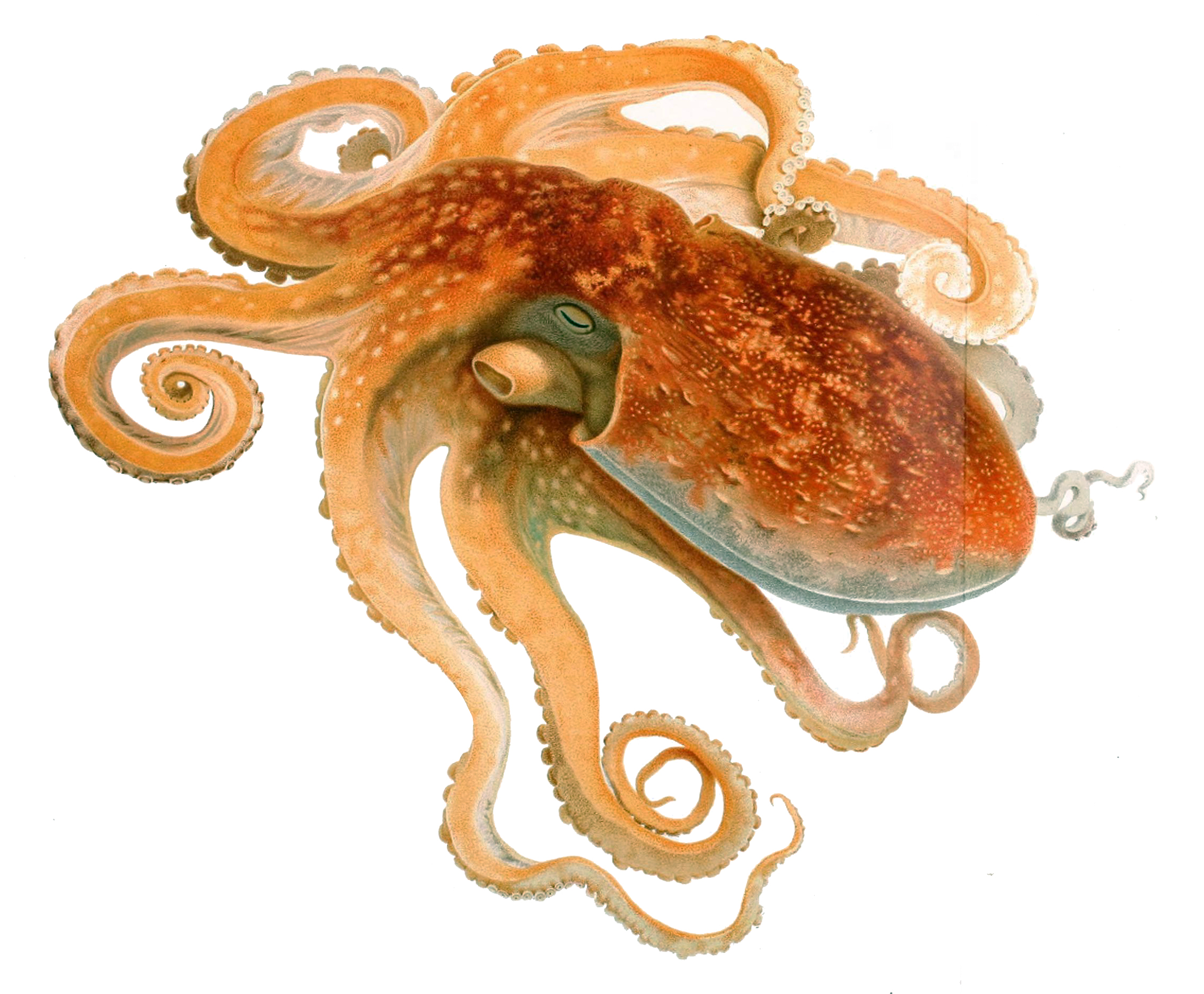
Curled Octopus
Eledone cirrhosa
Photo: Wikimedia Commons (CC) via https://en.wikipedia.org/wiki/Curled_octopus
Overview
The curled octopus, also known as the horned octopus, lesser octopus or northern octopus, is a species of cephalopod found in the northeast Atlantic, ranging from Norway to the Mediterranean, including the British Isles. The total length of an adult is around 50 cm, but their arms are often tightly curled. It immobilises and eats large crustaceans by drilling a hole through their shell.
It is mainly by-catch in commercial fisheries of the north eastern Atlantic and Mediterranean, where the common octopus is the preferred species.
The Curled Octopus faces significant population declines primarily due to intensive commercial fishing pressure and habitat degradation in coastal waters. Overfishing has reduced prey availability while bottom trawling activities destroy critical benthic habitats where this species forages and shelters.
Habitat
The curled octopus is mainly found at depths between and may occur down to . It lives in the northeast Atlantic Ocean, including the English Channel, the North Sea, and the Mediterranean Sea. In recent years the North Sea populations have increased, probably due to overfishing of large predatory fish such as Atlantic cod. This has had an effect on crab and lobster fisheries as the curled octopus...
Threatened in Algeria


Frequently asked questions
Why is Curled Octopus classified as Endangered?
Where does Curled Octopus live?
What are the main threats to Curled Octopus?
Get weekly conservation intelligence
One short digest a week of the most striking species and country data we ship, plus breaking conservation news paired with our database where it matters.
Free, no spam. One-click unsubscribe in every email.