Cuban Butterfly-marked Frog
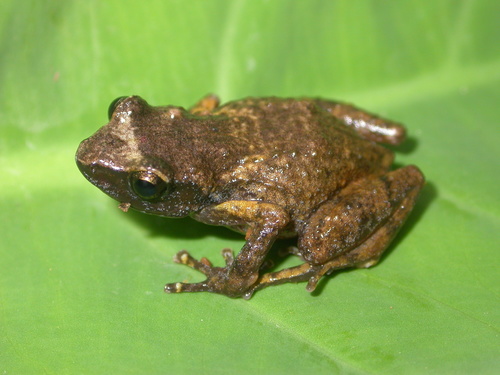
Eleutherodactylus mariposa
Overview
Eleutherodactylus mariposa is a critically endangered frog species endemic to Cuba, belonging to the diverse genus of direct-developing frogs known as rain frogs or coquís. This small amphibian is characterized by its direct development, meaning it bypasses the typical tadpole stage and develops entirely within the egg before hatching as a miniature adult frog. The species is found in montane forest environments in Cuba, where it occupies a highly restricted range.
Like many Caribbean endemic amphibians, E. mariposa faces severe threats from habitat destruction and fragmentation due to deforestation, agricultural expansion, and urban development. The species' limited distribution makes it particularly vulnerable to environmental changes and human activities.
Climate change poses an additional threat, as shifting temperature and precipitation patterns can alter the delicate moisture conditions required for successful reproduction and survival. The fungal disease chytridiomycosis, which has devastated amphibian populations worldwide, represents another significant concern for this species. Conservation efforts for E.
mariposa are complicated by Cuba's unique political and economic situation, though local researchers and international collaborations work to study and protect remaining populations. The species' critically endangered status reflects the urgent need for habitat protection and population monitoring to prevent extinction.
Eleutherodactylus mariposa faces primary threats from habitat loss due to deforestation and agricultural conversion of its montane forest habitat. Climate change and the potential spread of chytridiomycosis fungal disease pose additional risks to this already vulnerable population.
Habitat
This species inhabits montane forests in Cuba, requiring the moist microhabitats typical of tropical mountain ecosystems. The frogs depend on forest floor leaf litter and vegetation for shelter and breeding sites.
Conservation measures underway
Other threatened species in ELEUTHERODACTYLIDAE

Threatened in Cuba
Frequently asked questions
Why is Cuban Butterfly-marked Frog classified as Critically Endangered?
Where does Cuban Butterfly-marked Frog live?
What are the main threats to Cuban Butterfly-marked Frog?
Get weekly conservation intelligence
One short digest a week of the most striking species and country data we ship, plus breaking conservation news paired with our database where it matters.
Free, no spam. One-click unsubscribe in every email.