Coastal Plains Skink
Ctenotus ora
Overview
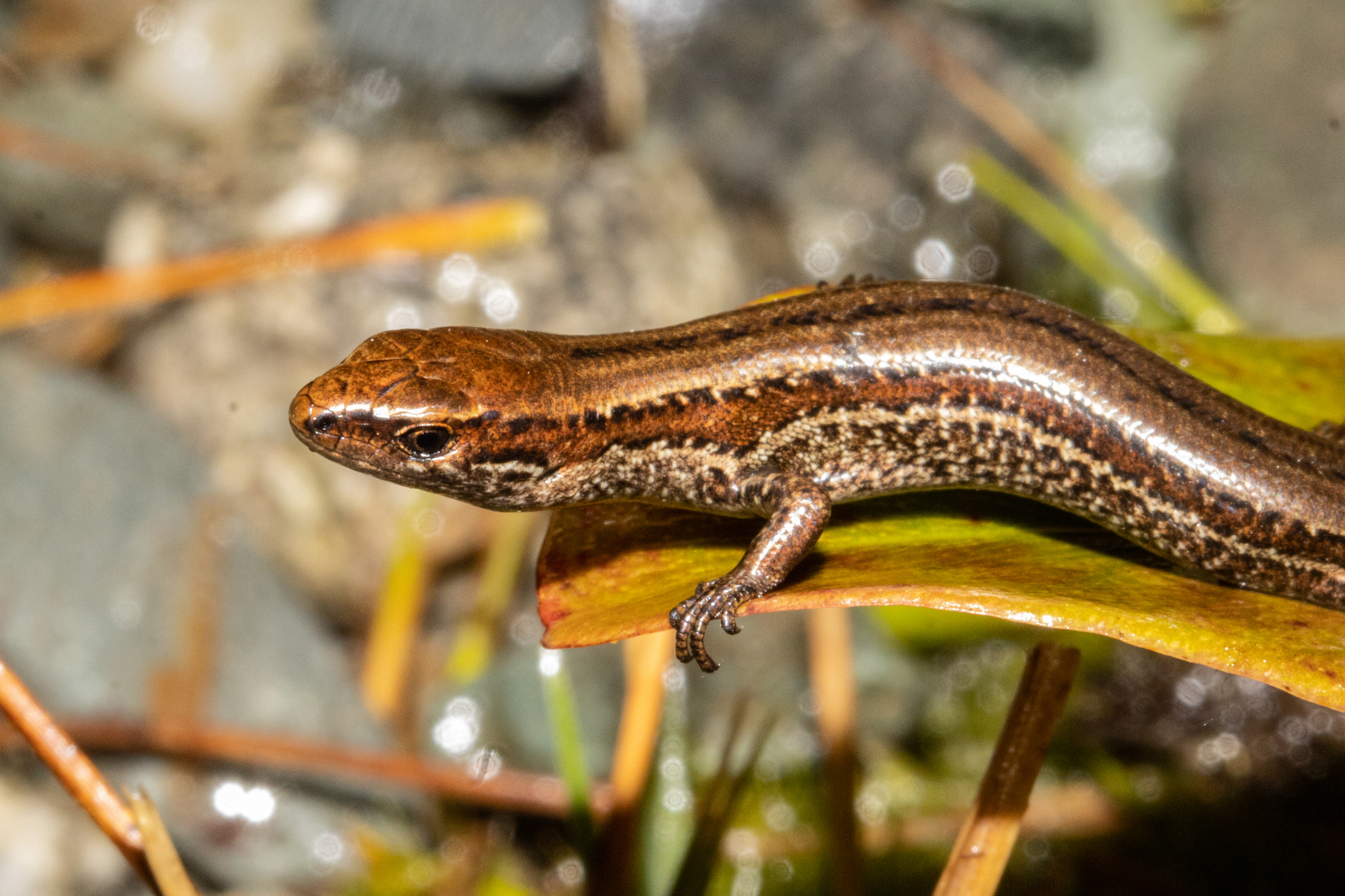
Ctenotus ora is a small, slender skink characterized by a streamlined body, smooth glossy scales, and the longitudinal striping pattern typical of the genus, usually in shades of brown, cream, and dark brown or black. Like other Ctenotus species, it is a fast-moving, diurnal, ground-dwelling lizard that forages actively for invertebrates such as insects and spiders among leaf litter and sand. Within its ecosystem, it contributes to invertebrate population control and serves as a prey item for birds, snakes, and larger reptiles.
This species is endemic to Australia, restricted to coastal habitats along the western coastline. It occupies forest, shrubland, and coastal or supratidal zones, often in sandy substrates that support burrowing and basking behavior. Its reliance on relatively narrow coastal habitat bands makes it particularly sensitive to changes in land use along the coast.
The primary threats to Ctenotus ora are habitat loss and fragmentation driven by ongoing residential and urban development, along with the expansion of commercial and industrial infrastructure. These land-use changes degrade and remove the sandy coastal habitats the species depends on, reducing available range and fragmenting remaining populations into smaller, more isolated groups.
Conservation attention for this species is linked to broader coastal habitat protection efforts in Western Australia, including planning controls that regulate development in sensitive coastal zones and environmental impact assessments applied to proposed construction projects. Ongoing monitoring aims to better define its distribution and population status.
Given the continued pace of coastal development within its limited range, the population trend is currently assessed as decreasing. Without stronger habitat protection measures, further contraction of suitable habitat is likely, sustaining its classification as Vulnerable.
The Coastal Plains Skink is primarily threatened by the ongoing spread of housing developments and urban neighborhoods into its natural habitat, as well as the construction of commercial and industrial buildings on land it depends on. Both of these pressures are actively continuing, steadily reducing the amount of natural habitat available to this species. Based on the ongoing nature of these threats, the pressures on this species appear to be stable to intensifying rather than decreasing.
Habitat
Conservation measures underway
Other threatened species in SCINCIDAE

Threatened in Australia
Frequently asked questions
Why is Coastal Plains Skink classified as Vulnerable?
Where does Coastal Plains Skink live?
What are the main threats to Coastal Plains Skink?
Get weekly conservation intelligence
One short digest a week of the most striking species and country data we ship, plus breaking conservation news paired with our database where it matters.
Free, no spam. One-click unsubscribe in every email.