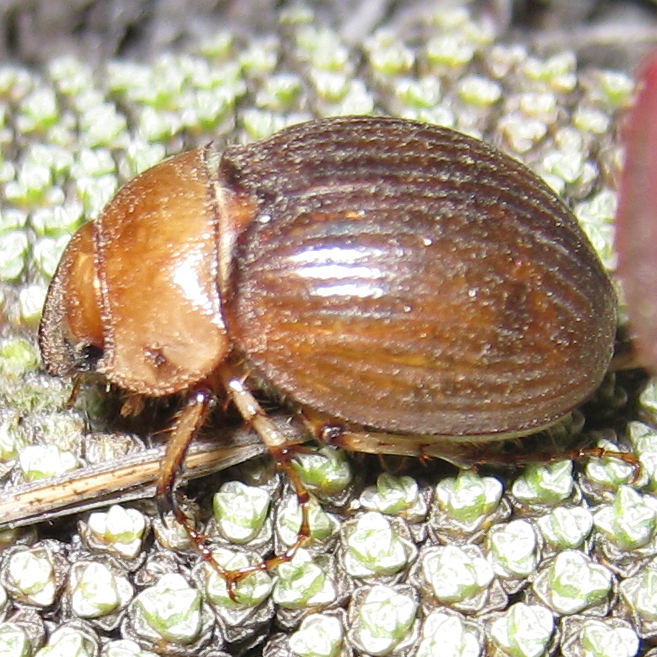
Prodontria lewisi
Photo: Wikimedia Commons (CC) via https://en.wikipedia.org/wiki/Cromwell_chafer_beetle
Overview
The Cromwell chafer beetle is a species of flightless beetle in the family Scarabaeidae. It is found in just one spot in Central Otago, New Zealand, which is now a nature reserve.
Prodontria lewisi faces severe threats from habitat destruction due to urban development and agricultural expansion in its limited range. The species' extremely restricted distribution makes it particularly vulnerable to localized environmental changes and human disturbance. Mining activities and infrastructure development pose additional pressures on the remaining suitable habitat patches.
Habitat
This species inhabits specific microhabitats within temperate forest ecosystems, typically associated with particular soil types and vegetation communities. It requires undisturbed forest floor conditions with appropriate moisture levels and organic matter composition.
Other threatened species in SCARABAEIDAE
Threatened in New Zealand
Frequently asked questions
Why is Prodontria lewisi classified as Critically Endangered?
Where does Prodontria lewisi live?
What are the main threats to Prodontria lewisi?
Get weekly conservation intelligence
One short digest a week of the most striking species and country data we ship, plus breaking conservation news paired with our database where it matters.
Free, no spam. One-click unsubscribe in every email.