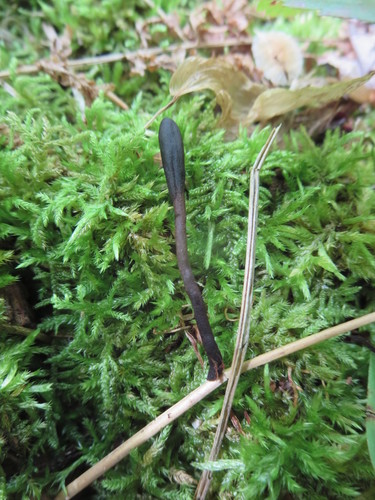
Common Black Earth Tongue
Geoglossum simile
Photo: iNaturalist: (c) Django Grootmyers, some rights reserved (CC BY-SA), uploaded by Django Grootmyers
Overview
The Common Black Earth Tongue is a distinctive club-shaped fungus with a dark brown to black, spatula-like fruiting body that emerges from soil in grasslands and meadows. These saprophytic fungi play a crucial ecological role in nutrient cycling by decomposing organic matter in soil and forming associations with plant roots. The species typically grows 2-8 cm tall with a smooth, tongue-like cap that distinguishes it from other earth tongue species.
The Common Black Earth Tongue is declining primarily due to habitat loss and degradation of its specialized grassland ecosystems. Agricultural intensification, including increased fertilizer use and conversion of semi-natural grasslands to intensive farming, has severely reduced suitable habitat. Climate change and atmospheric nitrogen deposition further threaten the nutrient-poor grassland conditions this species requires.
Habitat
This species thrives in nutrient-poor, calcareous grasslands, old pastures, and chalk downs where it grows among short grasses and mosses. It particularly favors undisturbed, species-rich meadows with thin soils that have been maintained by traditional low-intensity grazing practices.
Other threatened species in Geoglossaceae


Frequently asked questions
Why is Common Black Earth Tongue classified as Endangered?
Where does Common Black Earth Tongue live?
What are the main threats to Common Black Earth Tongue?
Get weekly conservation intelligence
One short digest a week of the most striking species and country data we ship, plus breaking conservation news paired with our database where it matters.
Free, no spam. One-click unsubscribe in every email.