
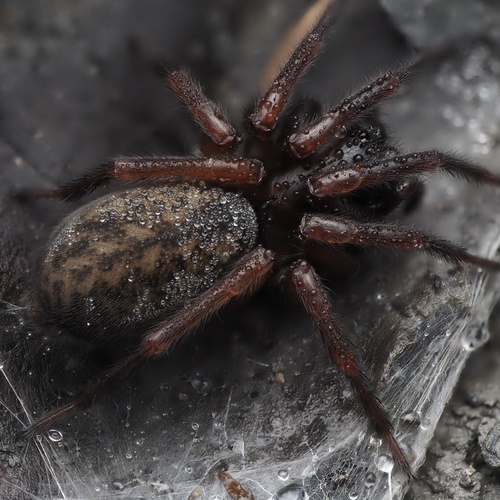
Coelotes terrestris
Photo: Wikimedia Commons (CC) via https://en.wikipedia.org/wiki/Coelotes_terrestris
Overview
Coelotes terrestris, the ground-living spider, is a spider in the family Agelenidae that stems from the once-assumed affiliation of the genus Coelotes, including this species, with the family Amaurobiidae, which has since been refuted.
Coelotes terrestris faces significant threats from habitat degradation and fragmentation due to urbanization and agricultural expansion in its native range. Climate change poses additional risks by altering the microhabitat conditions essential for this ground-dwelling spider species, while pollution and pesticide use in agricultural areas further compromise population stability.
Habitat
This species inhabits forest floors, woodland edges, and areas with dense leaf litter and organic debris in temperate regions. It constructs funnel webs in soil crevices, under rocks, and among root systems in moist, shaded terrestrial environments.
Other threatened species in Agelenidae
Threatened in Austria
Frequently asked questions
Why is Coelotes terrestris classified as Vulnerable?
Where does Coelotes terrestris live?
What are the main threats to Coelotes terrestris?
Get weekly conservation intelligence
One short digest a week of the most striking species and country data we ship, plus breaking conservation news paired with our database where it matters.
Free, no spam. One-click unsubscribe in every email.