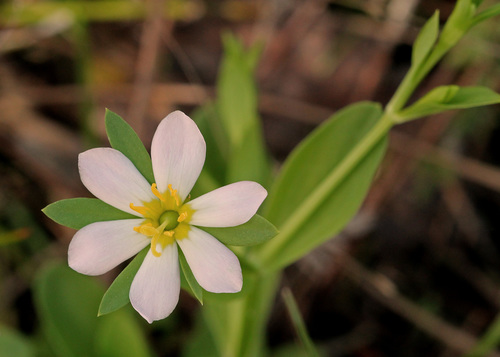
coastal rose gentian
Sabatia calycina
Photo: iNaturalist: (c) Mary Keim, some rights reserved (CC BY-NC-SA)
Overview
Sabatia calycina, commonly known as coastal rose gentian or coastal rose-pink, is a perennial flower native to North America and the Caribbean.
Coastal rose gentian faces severe threats primarily from habitat loss due to coastal development, sea level rise, and human disturbance of its specialized salt marsh and coastal prairie habitats. The species' extremely limited range and small population size make it highly vulnerable to stochastic events and further habitat degradation.
Habitat
Within North America S. calycina may be found in the southeastern coastal plain region, its range stretching from Virginia south to Florida and westwards to Texas. Disjunct populations also exist in western Cuba and the Dominican Republic.
Sabatia calycina is considered by the United States Department of Agriculture to be an obligate wetland species.
Other threatened species in Gentianaceae

Frequently asked questions
Why is coastal rose gentian classified as Critically Endangered?
Where does coastal rose gentian live?
What are the main threats to coastal rose gentian?
Get weekly conservation intelligence
One short digest a week of the most striking species and country data we ship, plus breaking conservation news paired with our database where it matters.
Free, no spam. One-click unsubscribe in every email.