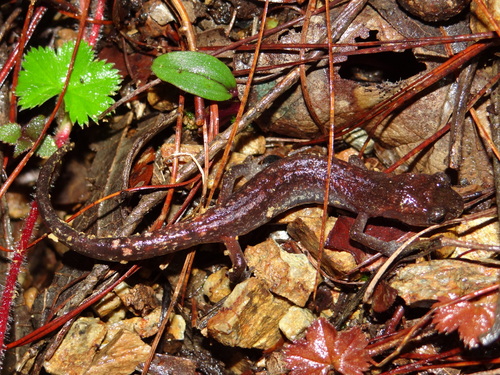
Claw-toothed Salamander
Pseudoeurycea unguidentis
Photo: (c) timoteo_b, some rights reserved (CC BY-NC)
Overview
Pseudoeurycea unguidentis is a species of salamander in the family Plethodontidae. It is endemic to northern Oaxaca, Mexico, where it is known from its type locality, Cerro San Felipe in the Sierra Madre de Oaxaca, and some other mountains, although the identity of animals from these other locations is uncertain. Its common names are claw-toothed salamander, clawtooth false brook salamander, and clawtoed false brook salamander.
Pseudoeurycea unguidentis faces severe threats from habitat destruction due to agricultural expansion and logging activities in its restricted montane forest range. The species' extremely limited distribution makes it particularly vulnerable to local environmental changes, with deforestation fragmenting the remaining cloud forest patches essential for its survival. Climate change poses an additional threat by altering the moisture regimes and temperature conditions of its specialized high-altitude habitat.
Habitat
This salamander inhabits cloud forests and pine-oak forests at high elevations in the mountains of central Mexico. It requires moist, cool conditions with abundant leaf litter and fallen logs for shelter and breeding.
Conservation measures underway
Other threatened species in PLETHODONTIDAE


Threatened in Mexico
Frequently asked questions
Why is Claw-toothed Salamander classified as Critically Endangered?
Where does Claw-toothed Salamander live?
What are the main threats to Claw-toothed Salamander?
Get weekly conservation intelligence
One short digest a week of the most striking species and country data we ship, plus breaking conservation news paired with our database where it matters.
Free, no spam. One-click unsubscribe in every email.