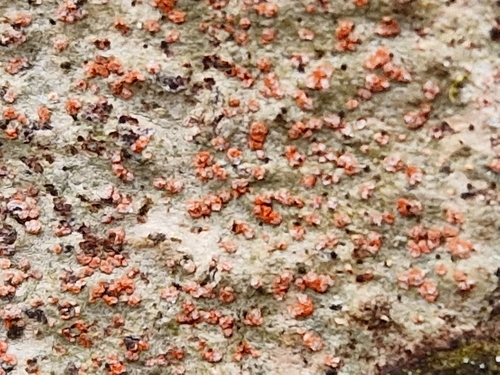
Bloody Comma Lichen
Coniocarpon cinnabarinum
Photo: iNaturalist: (c) Rémy Poncet, some rights reserved (CC BY-NC), uploaded by Rémy Poncet
Overview
Cinnoberfläck (Coniocarpon cinnabarinum) is a distinctive crustose lichen characterized by its striking cinnabar-red to orange-red fruiting bodies (apothecia) that contrast sharply against its pale gray to whitish thallus. This slow-growing epiphytic species plays a crucial role in forest ecosystems by contributing to nutrient cycling and providing microhabitat for invertebrates, while serving as an indicator of air quality and old-growth forest conditions.
Coniocarpon cinnabarinum, a crustose lichen species, faces severe population declines primarily due to habitat loss from deforestation and air pollution. The species is particularly vulnerable to changes in air quality and forest fragmentation, as lichens are highly sensitive bioindicators that require specific environmental conditions to survive.
Habitat
Cinnoberfläck grows exclusively on the bark of mature deciduous trees, particularly favoring the smooth bark of old beech, maple, and ash trees in humid, well-ventilated forest environments. It thrives in undisturbed montane and submontane forests with consistent moisture levels and minimal air pollution, typically found at elevations between 300-1200 meters.
Other threatened species in Arthoniaceae
Frequently asked questions
Why is Bloody Comma Lichen classified as Critically Endangered?
Where does Bloody Comma Lichen live?
What are the main threats to Bloody Comma Lichen?
Get weekly conservation intelligence
One short digest a week of the most striking species and country data we ship, plus breaking conservation news paired with our database where it matters.
Free, no spam. One-click unsubscribe in every email.