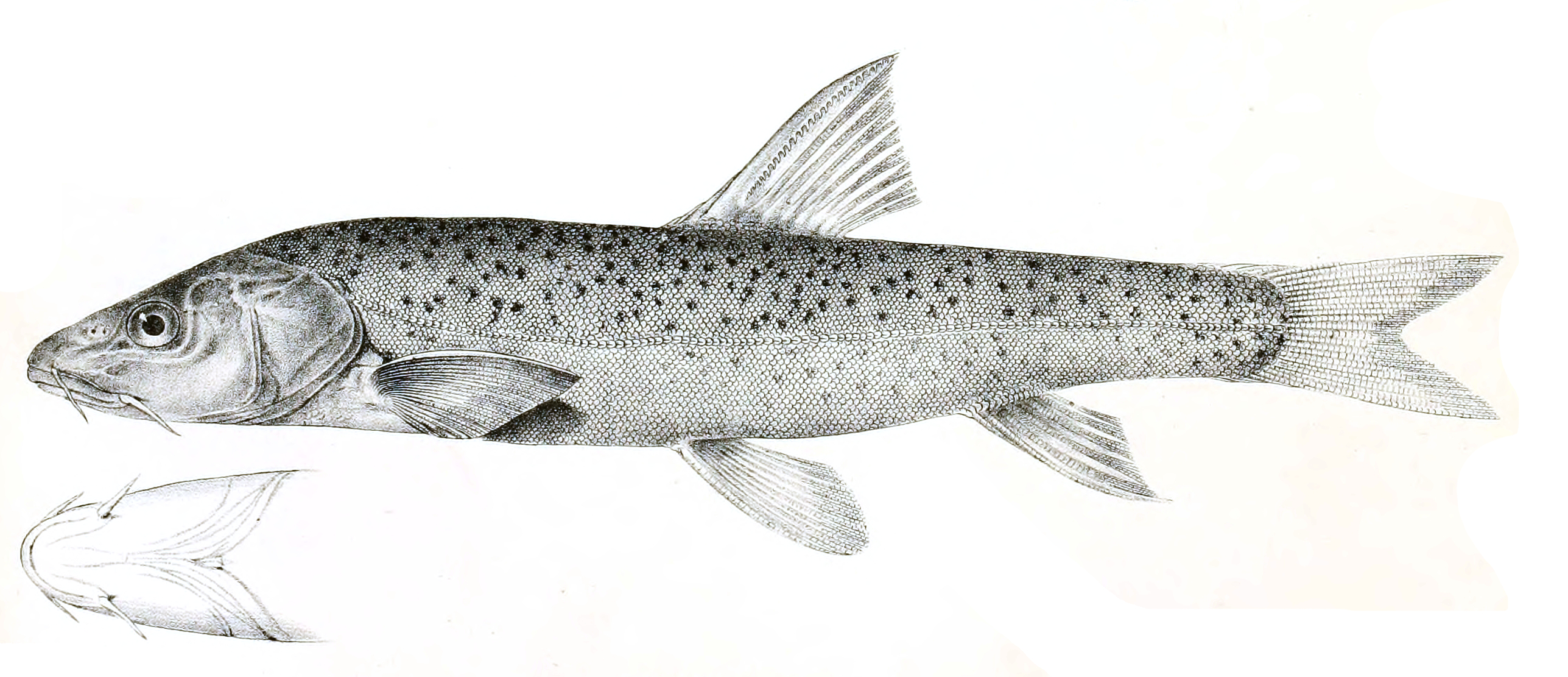
Schizothorax esocinus
Photo: Wikimedia Commons (CC) via https://en.wikipedia.org/wiki/Chirruh_snowtrout
Overview
Schizothorax esocinus, commonly known as the Himalayan snowtrout, is a cold-water cyprinid fish endemic to high-altitude freshwater systems across the Hindu Kush-Himalayan region. This elongated fish typically features a streamlined body adapted for swift currents, with a distinctive inferior mouth suited for bottom feeding. As a key component of montane aquatic ecosystems, it serves as both predator of smaller fish and invertebrates and prey for larger species, while contributing to nutrient cycling in these pristine watersheds.
The species inhabits permanent freshwater lakes and rivers across India, Pakistan, Nepal, Afghanistan, and China, primarily at elevations between 1,500-4,000 meters. These cold, oxygen-rich waters provide the specific thermal conditions essential for the species' survival and reproduction.
Multiple anthropogenic pressures are driving population declines. Hydroelectric dam construction fragments river systems and alters flow regimes critical for spawning. Intensive fishing pressure, particularly during breeding seasons, reduces reproductive success.
Agricultural runoff from expanding crop cultivation introduces pollutants and sediments that degrade water quality. Invasive species compete for resources and habitat space, while domestic wastewater discharge from growing mountain communities adds additional contamination stress.
Conservation efforts remain limited and fragmented across the species' transboundary range. Some protected areas encompass portions of its habitat, and fishing regulations exist in certain jurisdictions, though enforcement is often inadequate.
The species' outlook remains concerning. Continued infrastructure development, climate change impacts on high-altitude ecosystems, and increasing human pressure suggest further population declines are likely without coordinated international conservation action and improved habitat protection measures.
Schizothorax esocinus, a fish species, faces multiple ongoing threats including overfishing, dam construction that blocks their movement and alters water flow, and pollution from sewage and urban waste that degrades water quality. The species is also threatened by invasive species that compete for resources or spread diseases, as well as habitat disruption from renewable energy projects and agricultural activities near waterways. All of these threats are currently ongoing with no clear indication of whether they are increasing or decreasing in intensity.
Habitat
Conservation measures underway
Other threatened species in CYPRINIDAE
Threatened in Afghanistan

Frequently asked questions
Why is Schizothorax esocinus classified as Vulnerable?
Where does Schizothorax esocinus live?
What are the main threats to Schizothorax esocinus?
Get weekly conservation intelligence
One short digest a week of the most striking species and country data we ship, plus breaking conservation news paired with our database where it matters.
Free, no spam. One-click unsubscribe in every email.