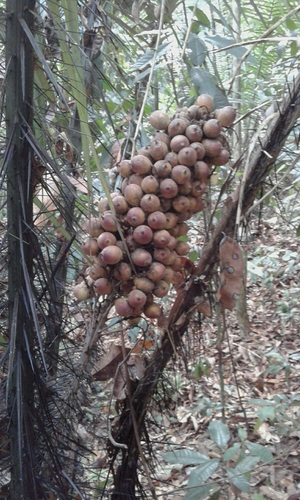
Astrocaryum malybo
Photo: iNaturalist: (c) Jhon Mario Florez Salazar, some rights reserved (CC BY-NC-ND), uploaded by Jhon Mario Florez Salazar
Overview
The chingalé (Astrocaryum malybo) is a spiny palm species native to tropical South America, characterized by its distinctive feather-like fronds and trunk covered in sharp, black spines. This medium-sized palm produces clusters of orange to reddish fruits that serve as an important food source for various wildlife species including birds, mammals, and insects in its ecosystem.
Astrocaryum malybo faces severe population decline primarily due to habitat destruction from agricultural expansion and urban development in its limited range. The species is further threatened by over-harvesting of its fruits and palm hearts for local consumption and commercial use.
Habitat
Chingalé thrives in humid lowland rainforests and gallery forests along riverbanks, typically found in areas with rich, well-drained soils and consistent moisture. The species also occurs in secondary forest edges and can tolerate some degree of canopy openness, though it requires protection from direct sunlight during early growth stages.
Other threatened species in Arecaceae
Frequently asked questions
Why is Astrocaryum malybo classified as Endangered?
Where does Astrocaryum malybo live?
What are the main threats to Astrocaryum malybo?
Get weekly conservation intelligence
One short digest a week of the most striking species and country data we ship, plus breaking conservation news paired with our database where it matters.
Free, no spam. One-click unsubscribe in every email.