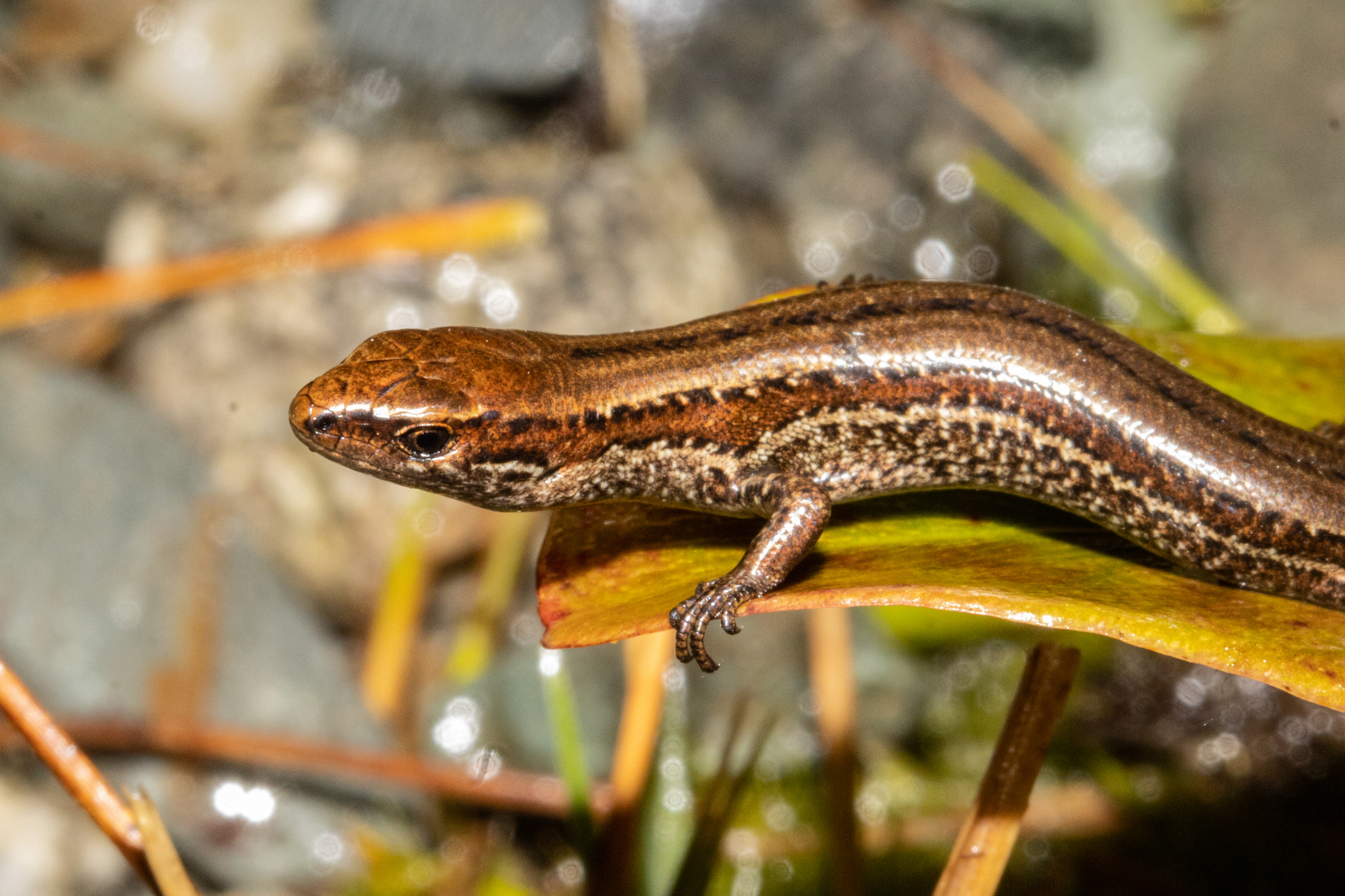
Cape Melville Rainbow-skink
Carlia wundalthini
Overview
Carlia wundalthini is a small scincid lizard belonging to the diverse rainbow-skink genus Carlia, characterized by smooth, glossy scales and the coloration typical of the group, often including iridescent sheens and countershading. Like other members of its genus, it is a diurnal, ground-dwelling insectivore, actively foraging through leaf litter and rocky microhabitats for invertebrate prey. As a small reptile, it likely serves as both predator of invertebrates and prey for larger reptiles and birds, contributing to energy flow within its ecosystem.
This species is endemic to Australia, restricted to the Cape Melville region of Cape York Peninsula in northeastern Queensland. It inhabits subtropical and tropical moist lowland forest, and its distribution appears to be tightly linked to the unique boulder-strewn terrain and microclimates found within this isolated range.
Its restricted range makes it particularly vulnerable to habitat shifting and alteration, which may result from changing climatic conditions affecting the specialized forest and rocky habitat structures it depends on. An additional unspecified threat, categorized broadly, is also recognized as ongoing, though details remain less defined. The species' narrow geographic distribution inherently increases its susceptibility to any localized environmental change.
Specific conservation programs targeting this species are not well documented, though its presence within the Cape Melville National Park likely affords it some degree of habitat protection through park management and restricted access to the rugged terrain it occupies.
Population trends remain unknown, and no numerical estimates of population size are currently available. Given its restricted range and the ongoing nature of habitat-related threats, continued monitoring is important to clarify its conservation trajectory and inform any future management interventions.
The Cape Melville Rainbow-skink faces ongoing risks from its rocky rainforest habitat gradually changing, likely linked to shifting climate conditions and temperature patterns in its very restricted mountain range. It also faces an additional unspecified ongoing threat that hasn't been clearly identified or documented. Since both threats are described as ongoing without signs of improvement, the overall threat level appears to be stable to potentially worsening rather than decreasing.
Habitat
Conservation measures underway
Other threatened species in SCINCIDAE

Threatened in Australia
Frequently asked questions
Why is Cape Melville Rainbow-skink classified as Vulnerable?
Where does Cape Melville Rainbow-skink live?
What are the main threats to Cape Melville Rainbow-skink?
Get weekly conservation intelligence
One short digest a week of the most striking species and country data we ship, plus breaking conservation news paired with our database where it matters.
Free, no spam. One-click unsubscribe in every email.