Pedra Branca Cool-skink
Carinascincus palfreymani
Overview
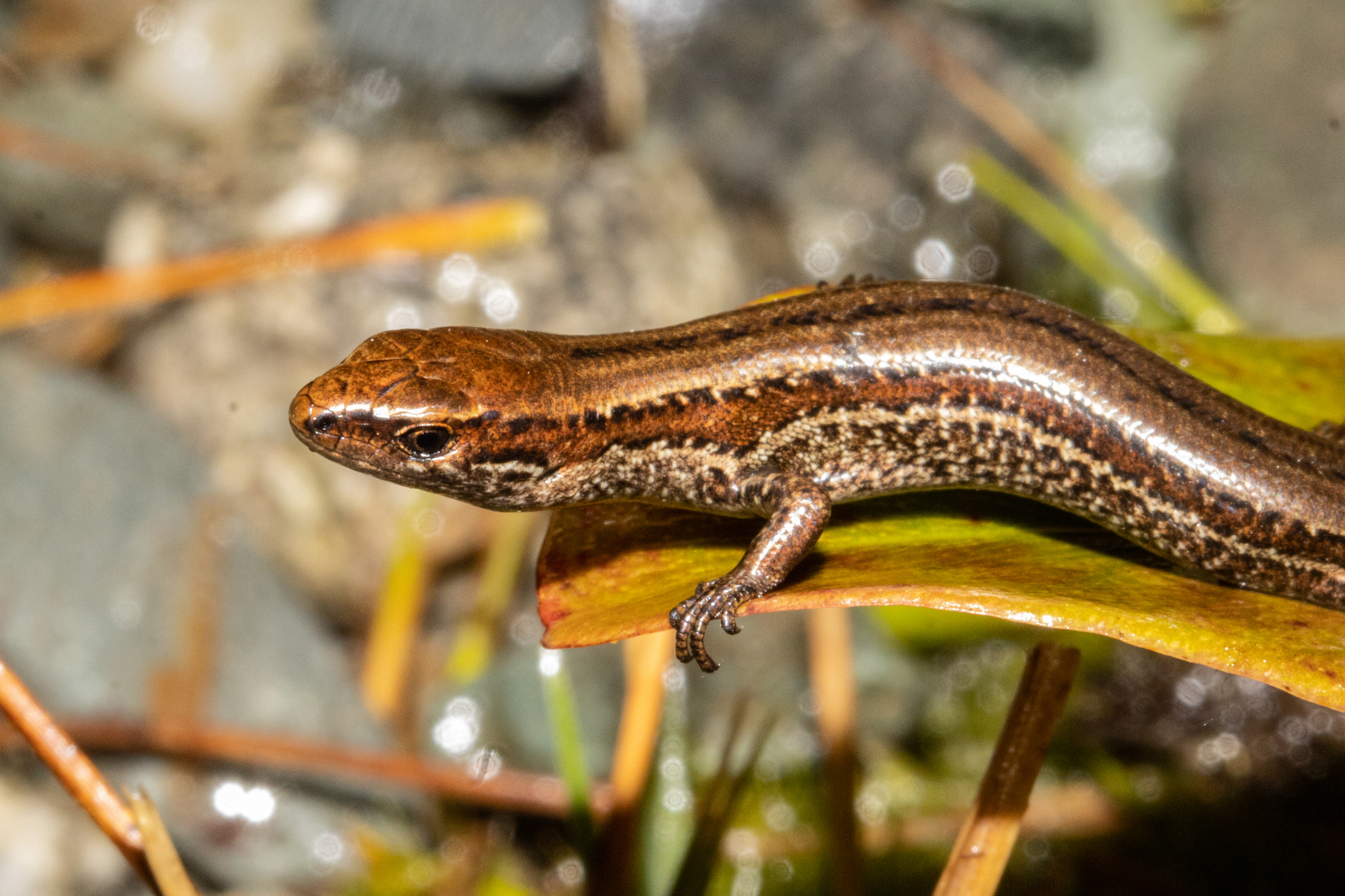
Confined to a single, isolated islet off Tasmania's south coast, this small skink represents one of the most geographically restricted reptiles in Australia. Like other members of the genus Carinascincus, it is a viviparous lizard, giving birth to live young rather than laying eggs, an adaptation suited to cool, temperate climates. It has the characteristic smooth, glossy scales and elongated body plan typical of skinks, allowing it to move quickly through rock crevices and low vegetation.
As an ectotherm, it relies on basking behaviour to regulate body temperature, and it likely feeds opportunistically on invertebrates found among coastal rocks and plant debris. Within its ecosystem, it plays a role as both predator of small invertebrates and prey for birds.
The species is endemic to Pedra Branca, a tiny, rugged granite islet in the Southern Ocean, isolated from mainland Tasmania. Its entire known range is limited to this single landmass, and detailed habitat assessments have not been formally completed, leaving gaps in understanding of its specific microhabitat needs and ecological requirements.
Its Vulnerable status stems primarily from ongoing habitat shifting and alteration. Given the extremely small size of its habitat, any environmental change on the islet, whether from erosion, storm impacts, or shifts in vegetation and seabird colony dynamics that shape the microhabitat, poses a disproportionate risk to the entire population.
Specific targeted conservation programs for this species are not well documented, though its presence on a remote, largely inaccessible islet offers some incidental protection from direct human disturbance.
With no confirmed population trend and limited ecological data, the species' trajectory remains uncertain. Its restricted range continues to make it inherently vulnerable to environmental change, warranting continued monitoring.
The Pedra Branca Cool-skink faces an ongoing threat from changes to its natural habitat, likely driven by shifting environmental conditions on the small island it calls home. Because this species lives in such a limited, isolated area, even small changes to the landscape or vegetation it depends on can have an outsized impact on its survival. This threat appears to be ongoing and stable, with no clear evidence indicating it is currently intensifying or decreasing based on the available data.
Conservation measures underway
Other threatened species in SCINCIDAE

Threatened in Australia
Frequently asked questions
Why is Pedra Branca Cool-skink classified as Vulnerable?
Where does Pedra Branca Cool-skink live?
What are the main threats to Pedra Branca Cool-skink?
Get weekly conservation intelligence
One short digest a week of the most striking species and country data we ship, plus breaking conservation news paired with our database where it matters.
Free, no spam. One-click unsubscribe in every email.