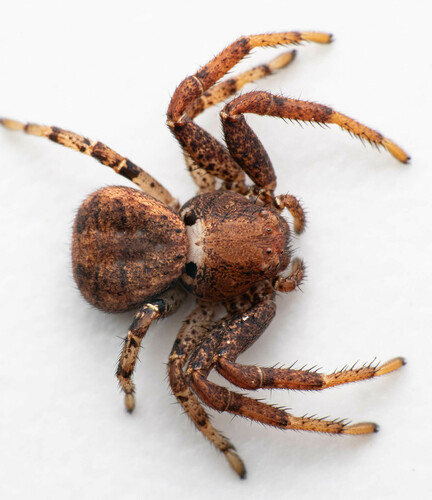
Xysticus luctator
Photo: iNaturalist: (c) Hubert Szymanski, some rights reserved (CC BY-NC), uploaded by Hubert Szymanski
Overview
The Cambridge krabspin (Xysticus luctator) is a small crab spider characterized by its cryptic brown and white mottled coloration that provides excellent camouflage against tree bark and lichen. These ambush predators play a crucial role in forest ecosystems by controlling populations of flying insects, particularly small flies and moths that they capture on tree trunks and branches.
The Cambridge krabspin spider faces significant threats from habitat degradation and fragmentation of its specialized microhabitats. Climate change and agricultural intensification are reducing the availability of suitable hunting grounds and web-building sites, while urbanization continues to fragment remaining populations across its range.
Habitat
Inhabits low vegetation, grasslands, heathlands, and woodland edges where it constructs small orb webs close to the ground. Prefers areas with diverse plant structure and abundant small flying insects, typically found in semi-natural habitats with minimal disturbance.
Other threatened species in Thomisidae
Threatened in Austria
Frequently asked questions
Why is Xysticus luctator classified as Vulnerable?
Where does Xysticus luctator live?
What are the main threats to Xysticus luctator?
Get weekly conservation intelligence
One short digest a week of the most striking species and country data we ship, plus breaking conservation news paired with our database where it matters.
Free, no spam. One-click unsubscribe in every email.