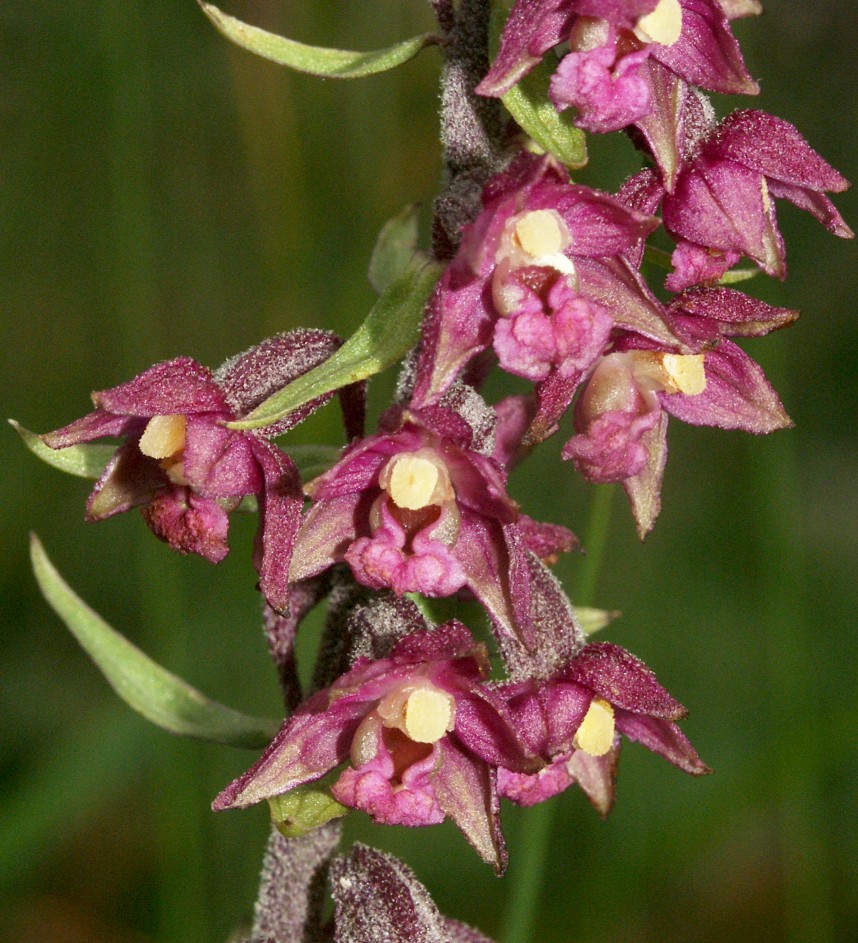
Burnt Orchid
CRCritically Endangered

Burnt Orchid

Neotinea ustulata

Neotinea ustulata, the burnt orchid or burnt-tip orchid, is a European terrestrial orchid native to mountains in central and southern Europe, growing at up to 2,400 m (7,900 ft) elevation. The plant is considered Endangered in Great Britain and Least Concern internationally based on IUCN Red List criteria.

Photo: Wikimedia Commons (CC) via https://en.wikipedia.org/wiki/Neotinea_ustulata

01Classification

Taxonomy & Classification

Kingdom

Plantae

Phylum

Tracheophyta

Class

Liliopsida

Order

Asparagales

Family

Orchidaceae

Genus

Neotinea

Burnt Orchid belongs to the family Orchidaceae, order Asparagales, within the Liliopsida class.

02Description

Species Profile

Neotinea ustulata, the burnt orchid or burnt-tip orchid, is a European terrestrial orchid native to mountains in central and southern Europe, growing at up to 2,400 m (7,900 ft) elevation. The plant is considered Endangered in Great Britain and Least Concern internationally based on IUCN Red List criteria. The burnt-tip orchid was voted the county flower of Wiltshire in 2002 following a poll by the wild flora conservation charity Plantlife.

The Burnt Orchid faces severe population declines primarily due to habitat loss and degradation of its specialized grassland ecosystems. Agricultural intensification, urban development, and changes in traditional land management practices have eliminated or fragmented the calcareous grasslands this species requires. Climate change and reduced grazing pressure further threaten the delicate ecological balance needed for this orchid's survival.

Key Facts

IUCN StatusCritically Endangered (CR)
GroupPlants
03Habitat

Habitat & Distribution

Neotinea ustulata is distributed throughout central and south Europe, with its main populations in Spain and Greece in the south, reaching England and southern Sweden in the north, and reaching as far east as the Caucasus and Ural mountains. It grows as high as elevation in the Carpathian mountains and the Alps. It typically grows on chalky subsoil (occasionally acidic soils) in grassland; fens...

04Threats

Threats

!

IUCN Red List: Critically Endangered

The Burnt Orchid faces severe population declines primarily due to habitat loss and degradation of its specialized grassland ecosystems. Agricultural intensification, urban development, and changes in traditional land management practices have eliminated or fragmented the calcareous grasslands this species requires. Climate change and reduced grazing pressure further threaten the delicate ecological balance needed for this orchid's survival.

Agricultural intensification

HighOngoing

Changes in grazing management

HighOngoing

Habitat loss and fragmentation

HighOngoing

Climate change impacts

MediumOngoing

Urban development and infrastructure

MediumOngoing
07National Status

National vs Global Threat Status

How this species is assessed at the national level compared to its IUCN global status (CR).

CountryNational StatusGlobal StatusComparison
EULCLeast ConcernCRCritically EndangeredLower local risk

National Red List data sourced from the National Red List Project (nationalredlist.org, ZSL) and country-specific Red List authorities.

Community

Community Sightings

Report a sighting

No community sightings yet. Be the first to report!

07Sources

Sources & Attribution

How to Cite

IUCN: IUCN (2025). The IUCN Red List of Threatened Species. Version 2025-1. Available at: https://www.iucnredlist.org. doi:10.2305/IUCN.UK.2025-1.RLTS

GBIF: GBIF.org (2025). GBIF Home Page. Available at: https://www.gbif.org

National Red Lists: ZSL (2025). National Red List. Zoological Society of London. Available at: https://www.nationalredlist.org

This page: SpeciesRadar (2025). Burnt Orchid (Neotinea ustulata). SpeciesRadar: Intelligence for Earth's Biodiversity. Available at: https://speciesradar.org/species/burnt-orchid

Full citation guide & data usage terms