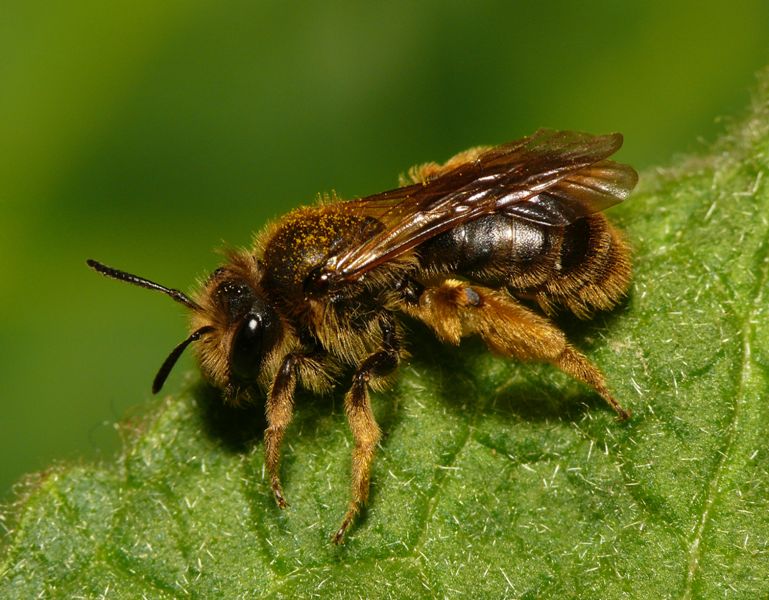
Buff-tailed Mining Bee
Andrena humilis
Photo: Wikimedia Commons (CC) via https://en.wikipedia.org/wiki/Andrena_humilis
Overview
The Buff-tailed Mining Bee is a medium-sized solitary bee species characterized by its distinctive buff-colored tail and robust, hairy body with golden-brown coloration. Females excavate individual nesting burrows in soil where they provision cells with pollen and nectar for their larvae, while both sexes serve as important pollinators of spring wildflowers and early-blooming trees.
The Buff-tailed Mining Bee faces significant threats from habitat loss due to agricultural intensification and urban development, which eliminates the sandy soils and wildflower meadows essential for nesting and foraging. Climate change and widespread pesticide use further compound these pressures, disrupting the bee's reproductive cycles and reducing available food sources.
Habitat
Sandy heathlands, coastal dunes, chalk downs, and flower-rich grasslands where females excavate burrows in well-drained sandy or light soils. The species requires diverse wildflower meadows and woodland edges with abundant spring and early summer blooms for nectar and pollen collection.
Other threatened species in Andrenidae

Threatened in Åland Islands


Frequently asked questions
Why is Buff-tailed Mining Bee classified as Vulnerable?
Where does Buff-tailed Mining Bee live?
What are the main threats to Buff-tailed Mining Bee?
Get weekly conservation intelligence
One short digest a week of the most striking species and country data we ship, plus breaking conservation news paired with our database where it matters.
Free, no spam. One-click unsubscribe in every email.