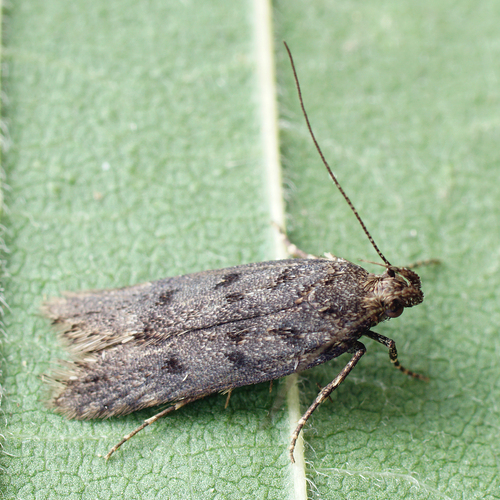
Buff Groundling
Prolita solutella
Photo: iNaturalist: (c) cossus, sommige rechten voorbehouden (CC BY-NC)
Overview
Prolita solutella is a moth of the family Gelechiidae. It is widely distributed throughout Europe, east to the Ural Mountains. It is also found in Turkey. The habitat consists of dry pastures and dry heathland.
The Buff Groundling faces significant threats from habitat loss due to agricultural expansion and urban development across its range. Climate change is altering the microclimatic conditions of its specialized grassland and heathland habitats, while pesticide use in agricultural areas reduces prey availability and may cause direct mortality.
Habitat
Inhabits dry grasslands, heathlands, and chalk downs with sparse vegetation, typically in areas with exposed soil and short turf. The species shows preference for south-facing slopes and disturbed ground in coastal and inland calcareous habitats.
Other threatened species in Gelechiidae


Threatened in Albania

Frequently asked questions
Why is Buff Groundling classified as Vulnerable?
Where does Buff Groundling live?
What are the main threats to Buff Groundling?
Get weekly conservation intelligence
One short digest a week of the most striking species and country data we ship, plus breaking conservation news paired with our database where it matters.
Free, no spam. One-click unsubscribe in every email.