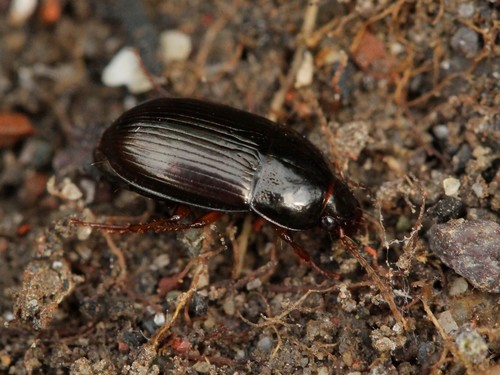
Amara brunnea
Photo: iNaturalist: no rights reserved, uploaded by Иван Пристрем
Overview
Brunlig ovalløber (Amara brunnea) is a medium-sized ground beetle characterized by its distinctive brownish-bronze coloration and oval-shaped body. This predatory beetle plays a crucial ecological role as both a seed disperser and predator of small invertebrates, helping maintain balance in terrestrial arthropod communities.
Amara brunnea faces severe population decline primarily due to habitat loss and degradation of its specialized coastal and sandy environments. Agricultural intensification, urban development, and changes in land management practices have significantly reduced the availability of suitable breeding and foraging habitats for this ground beetle species.
Habitat
This beetle inhabits open grasslands, meadows, and field margins with sparse vegetation and well-drained soils. It particularly favors areas with a mosaic of bare ground and low-growing herbaceous plants where it can hunt effectively.
Other threatened species in Carabidae

Frequently asked questions
Why is Amara brunnea classified as Critically Endangered?
Where does Amara brunnea live?
What are the main threats to Amara brunnea?
Get weekly conservation intelligence
One short digest a week of the most striking species and country data we ship, plus breaking conservation news paired with our database where it matters.
Free, no spam. One-click unsubscribe in every email.