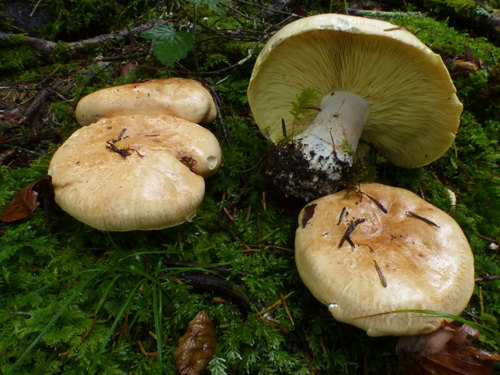
Leucopaxillus tricolor
Photo: iNaturalist: (c) Joseba, some rights reserved (CC BY-NC), uploaded by Joseba
Overview
Leucopaxillus tricolor, known as brödmusseron, is a distinctive mushroom species characterized by its tricolored cap displaying bands of brown, cream, and white coloration. This saprotrophic fungus plays a crucial role in forest ecosystems by decomposing organic matter and recycling nutrients back into the soil. The species typically produces large, robust fruiting bodies with thick stems and broad caps that can reach considerable size.
Leucopaxillus tricolor faces severe population decline primarily due to habitat loss and degradation of its specialized grassland and woodland edge environments. The species appears to be highly sensitive to changes in land use practices, particularly agricultural intensification and urbanization that fragment or eliminate its preferred habitats.
Habitat
Brödmusseron occurs in mature deciduous and mixed forests, particularly favoring areas with rich leaf litter and decaying hardwood debris. The species shows strong preference for calcareous soils in undisturbed woodland areas with stable microclimatic conditions.
Other threatened species in Tricholomataceae


Frequently asked questions
Why is Leucopaxillus tricolor classified as Critically Endangered?
Where does Leucopaxillus tricolor live?
What are the main threats to Leucopaxillus tricolor?
Get weekly conservation intelligence
One short digest a week of the most striking species and country data we ship, plus breaking conservation news paired with our database where it matters.
Free, no spam. One-click unsubscribe in every email.