
Bristle Club-rush
Isolepis setacea
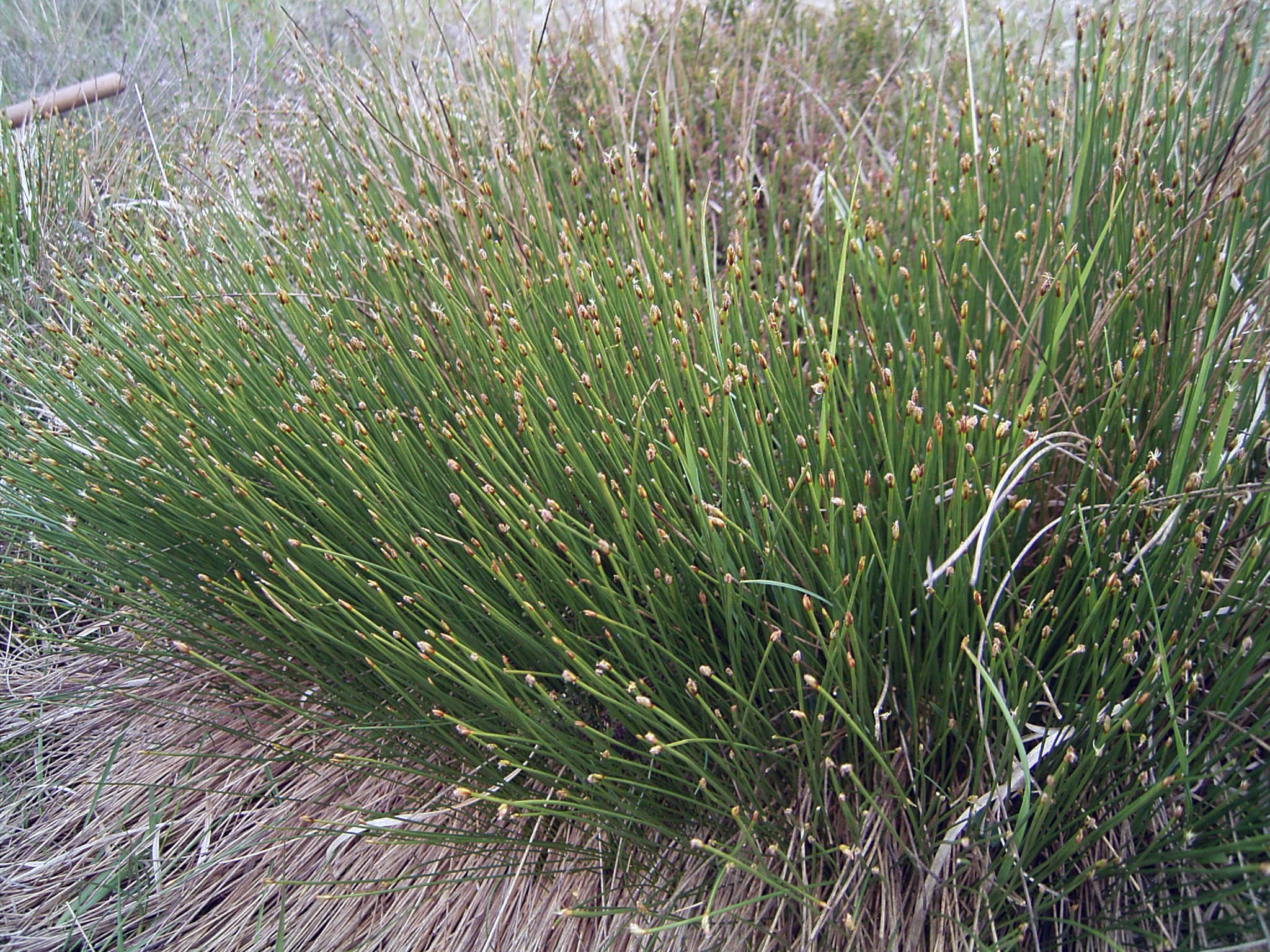
Photo: Wikimedia Commons (CC) via https://en.wikipedia.org/wiki/Isolepis_setacea
Overview
Isolepis setacea is a species of flowering plant in the sedge family known by the common names bristle club-rush and bristleleaf bulrush. It is native to Eurasia and Africa, and possibly Australasia. It can be found in other places, including some areas in North America, where it is an introduced species.
It grows in many types of moist and wet habitat, often in coastal regions, and sometimes inland. It is a perennial herb which forms mats of very thin, grooved, erect or arching stems up to about 20 centimeters tall. The leaves sheath the stem bases and have short, flat, thick blades.
The inflorescence is a solitary spikelet just a few millimeters long, or a cluster of up to three spikelets. These are accompanied by a stiff bract extending past the flowers.
Bristle Club-rush faces severe decline primarily due to habitat loss and degradation of its specialized wetland environments. Drainage of temporary pools, agricultural intensification, and urban development have eliminated many suitable sites, while remaining populations are threatened by water pollution and altered hydrology.
Habitat
Other threatened species in Cyperaceae


Frequently asked questions
Why is Bristle Club-rush classified as Endangered?
Where does Bristle Club-rush live?
What are the main threats to Bristle Club-rush?
Get weekly conservation intelligence
One short digest a week of the most striking species and country data we ship, plus breaking conservation news paired with our database where it matters.
Free, no spam. One-click unsubscribe in every email.