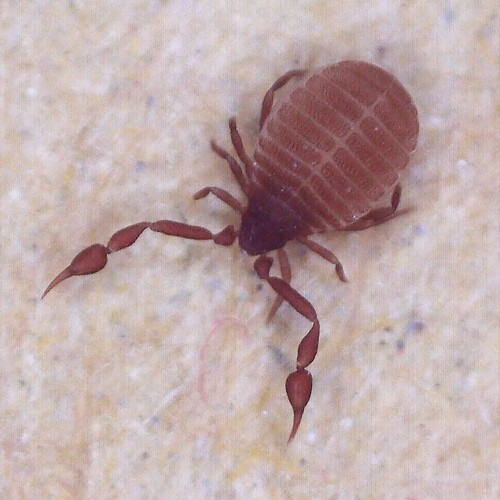
Book Scorpion
Cheiridium museorum
Photo: iNaturalist: (c) Barry Walter, some rights reserved (CC BY), uploaded by Barry Walter
Overview
The Book Scorpion (Cheiridium museorum) is a tiny arachnid measuring only 2-4mm in length, with characteristic pincers but lacking the tail and stinger of true scorpions. These diminutive predators have a flattened, reddish-brown body that allows them to squeeze into narrow spaces, where they hunt mites, booklice, and other small arthropods in human-associated environments.
The Book Scorpion faces significant threats from habitat loss and degradation, particularly in human-modified environments where it depends on specific microhabitat conditions. Climate change and increased use of pesticides in buildings and storage areas further threaten populations by altering humidity levels and reducing prey availability.
Habitat
Inhabits dark, humid microhabitats including old books, paper storage areas, herbarium collections, and dusty corners of buildings, libraries, and museums. Also found under bark, in leaf litter, and among stored organic materials where it hunts small arthropods.
Threatened in Åland Islands


Frequently asked questions
Why is Book Scorpion classified as Vulnerable?
Where does Book Scorpion live?
What are the main threats to Book Scorpion?
Get weekly conservation intelligence
One short digest a week of the most striking species and country data we ship, plus breaking conservation news paired with our database where it matters.
Free, no spam. One-click unsubscribe in every email.